Credit Karma Canada — Credit Build

Turning credit reports into clearer next steps

I led the research and design of Credit Build, helping Canadian Credit Karma members understand what had changed, what mattered most and what they could do next.

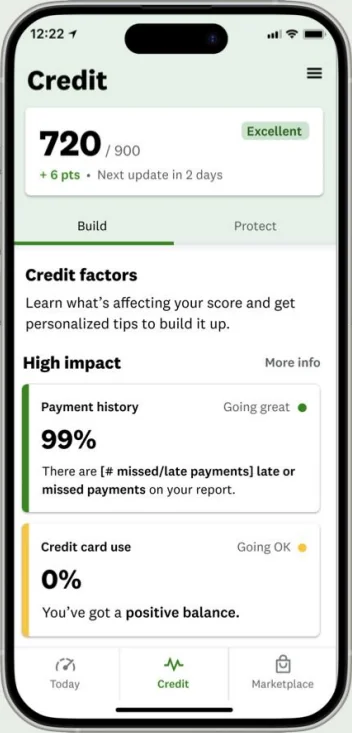
Credit Build home screen showing a credit score of 720 out of 900 and a list of high-impact credit factors.

Context

Members wanted to improve their credit but struggled to understand their reports.

Approach

Organise the experience around change, priority and action.

Results

200K members returning each month, 5× higher tap-through and 40% fewer complaints.

Context

Members were checking their scores without knowing what to do next

Retention and opt-ins were declining, particularly among members with subprime credit scores below 640. Yet 25% of active members came to Credit Karma intending to improve their credit.

Members could see their score, but many struggled to understand why it had changed, which factors carried the most influence and what they could do to improve their position.

“Tell me why my score dropped.”
“I don’t see how your app is helping me improve my score other than just showing it to me.”
Member feedback gathered through research and support logs.

The opportunity was to turn credit information into useful guidance. Working with Research, I investigated where members became confused, what they expected from Credit Karma and how Credit Build could make complex reports easier to navigate.
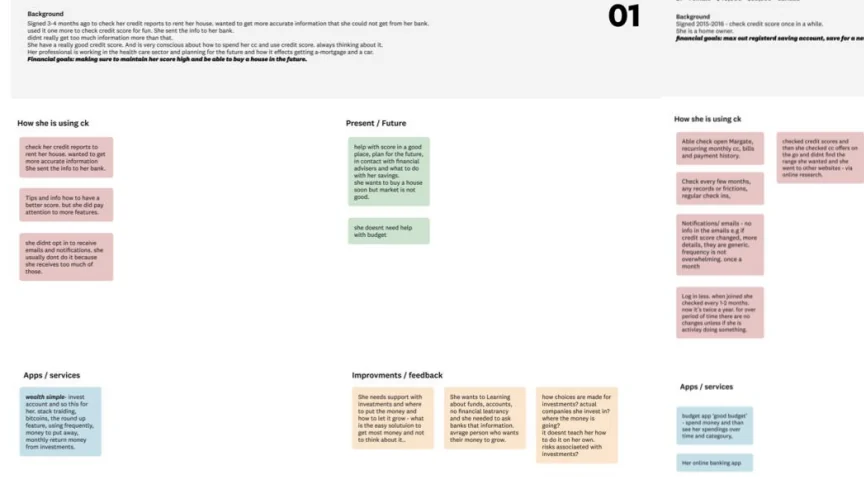
Research synthesis board mapping how members use Credit Karma, their plans for the future, and feedback on apps and services.
Synthesis from member interviews. Mapping current behaviour against what members expected next showed the gap was interpretation, not information.
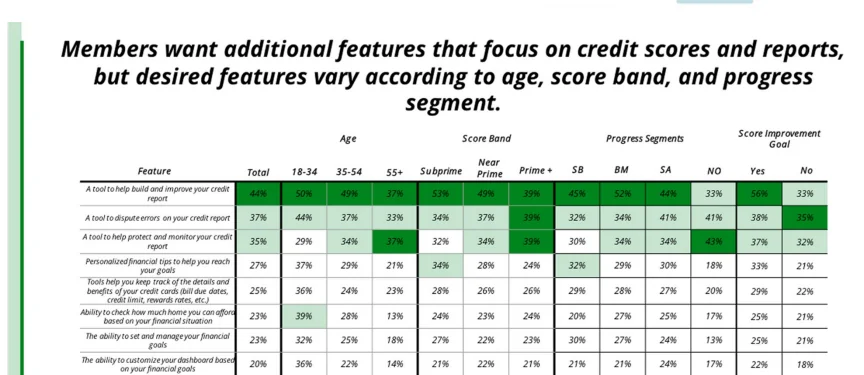
Survey matrix showing demand for credit features segmented by age, score band and progress segment.
Feature demand segmented by age, score band and progress. A tool to build and improve the credit report ranked first overall and highest among subprime members.

Approach

From score-checking to understanding and action

We organised the experience around three member questions

Initial concepts explored clearer credit factors, educational content and prompts within the existing report. Research helped us simplify the proposition around three questions:

  • What changed? Explain score movement in plain language.
  • What matters? Bring higher-impact credit factors to the foreground.
  • What can I do? Connect explanations to relevant next steps.

I used progressive disclosure to keep the initial view manageable. Members saw their most important changes and factors first, then opened explanations, supporting detail and action routes when they needed them.

The hierarchy reflected the relative influence of different credit factors rather than presenting every piece of information with equal weight. Usability testing helped refine the ordering, language and level of detail.
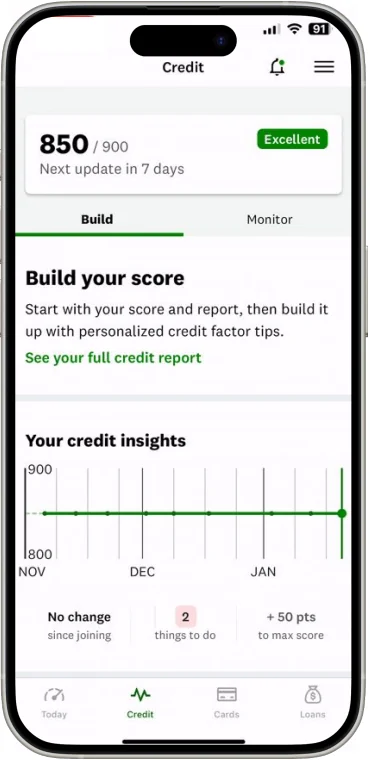
Credit Build dashboard showing score, a score history chart and prompts for what to do next.
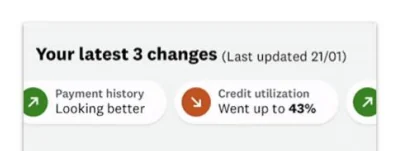
Card headed 'Your latest 3 changes' listing payment history improving and credit utilisation rising to 43%.
Recent movement is answered first, with direction shown before detail.
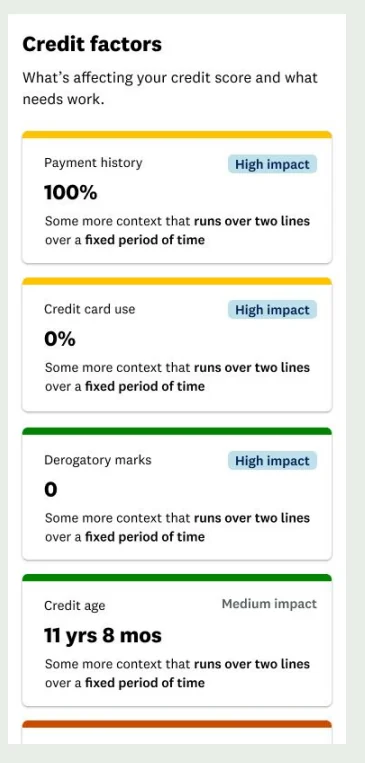
Stacked credit factor cards, each labelled high or medium impact with a coloured status bar.
Component exploration for the factor cards, shown with placeholder copy. Each factor carries an impact level and a status colour, so the member can tell at a glance which ones are worth their attention.

Every explanation ended somewhere useful

Each factor paired an explanation of what it meant with a specific next step. Karma Pro Tips offered a plain-language suggestion for the factor a member was reading about, backed by articles and tools for anyone wanting more depth, and routes into the credit card marketplace appeared where a product was genuinely relevant.
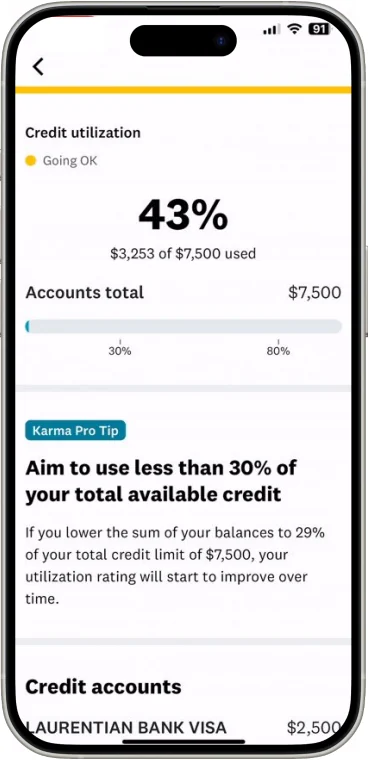
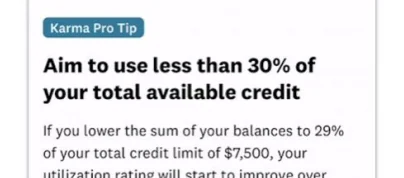
Credit utilisation detail screen showing 43% used, a progress bar and a Karma Pro Tip.
Karma Pro Tip card advising the member to use less than 30% of their available credit, with the reason explained.
The tip names a target and explains what reaching it would do, rather than telling the member their utilisation is too high.

We made missing credit information visible and actionable

Derogatory marks, such as bankruptcies and court judgments, were a particular source of frustration. Members could be declined for financial products while the relevant marks were not visible in their Credit Karma experience. They contacted support for an explanation, only to be redirected to TransUnion.

I worked with Product, Legal and Customer Support to establish what we could surface, how to explain it and where members needed to go for resolution. We brought these marks into Credit Build, explained their significance and provided a direct link to raise a dispute with TransUnion.

Members could see the issue and find the next step from the same experience. Disputes still took place through TransUnion.
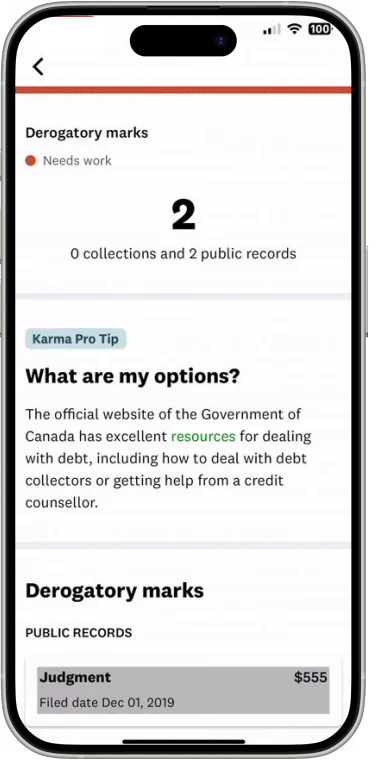
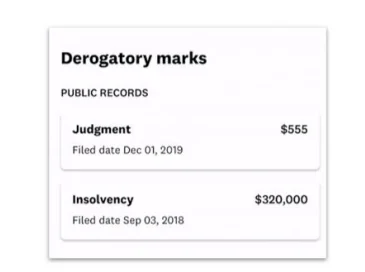
Derogatory marks screen showing two public records, a Karma Pro Tip explaining the member's options, and the records listed below.
Public records card listing a judgment of $555 and an insolvency of $320,000 with filing dates.
The marks themselves, with amounts and filing dates, previously visible only through TransUnion.
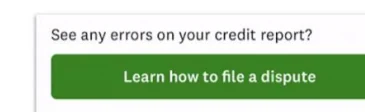
Prompt reading 'See any errors on your credit report?' above a button labelled 'Learn how to file a dispute'.
The dispute route, previously buried in the help centre, sits beside the record it applies to.

The route into Credit Build was part of the design

The feature needed to appear when members were already thinking about their credit.

We replaced the previous route with a native homepage entry point, increasing initial tap-through fivefold. Members could also opt in to score-change notifications, giving them a way to follow subsequent updates.
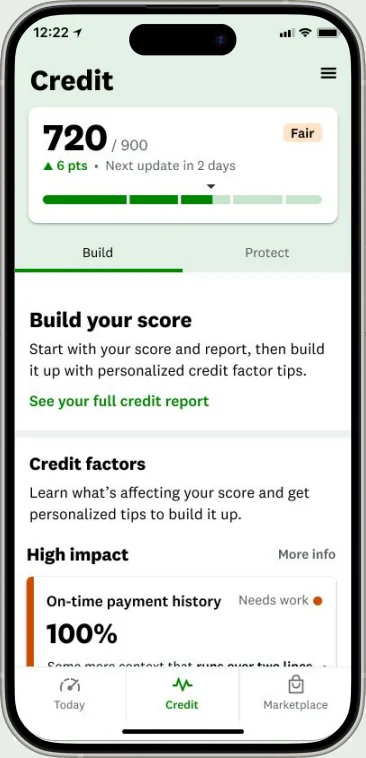
Credit home screen with the score at the top and Credit Build entry points directly beneath it.
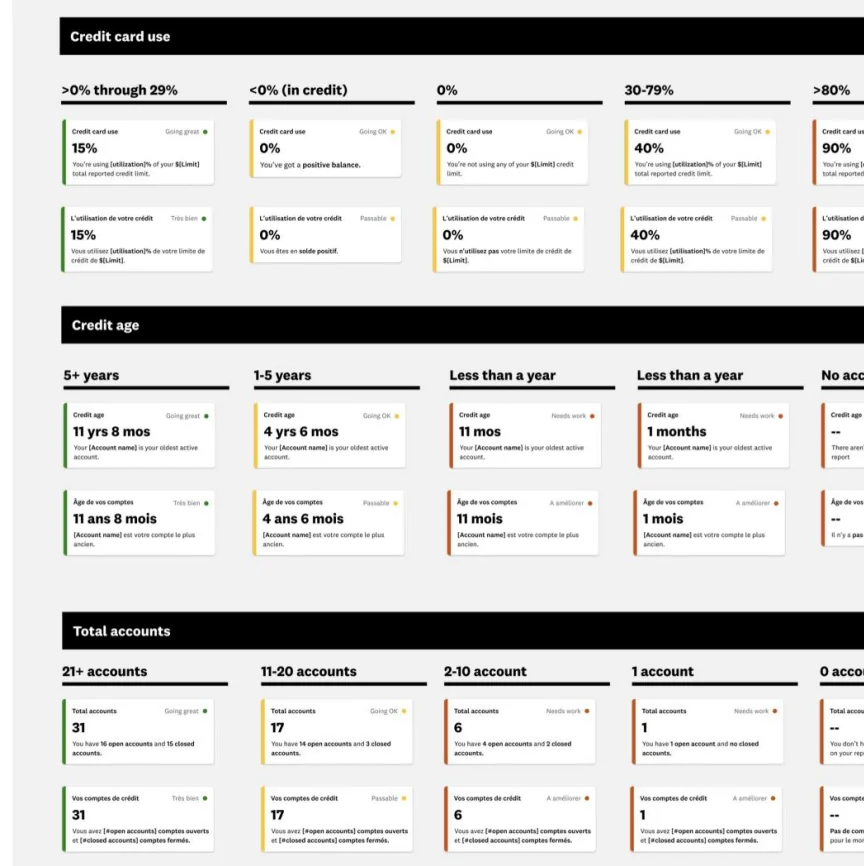
Content matrix showing every credit factor card state in English and French, across utilisation, credit age and total accounts.
Every factor state written and reviewed in English and French, so the explanation held up across the full range of member circumstances.

Results

Stronger engagement and fewer support complaints

200Kmembers returning each month
higher homepage tap-through into Credit Build4,446 app downloads in the first four days.
79%opt-in to ongoing credit notifications
17%increase in marketplace engagement
40%reduction in support complaintsFollowing the derogatory-mark changes, saving roughly £100 each.
64%found Credit Build helpful for understanding their financial detailsFrom a post-launch survey of 1,490 active Canadian members. 66% found it beneficial when trying to improve their credit — most often for the overview it gave them (48%), knowing what actions to take (48%) and tracking changes over time (43%).

My contribution connected the information hierarchy, the explanations and the resolution routes, giving members a clearer path from checking their credit to deciding what to do next — and resolving a significant source of avoidable support contact.