Problem
BBC Radio had outgrown Proteus
The system supported pitching and commissioning, but couldn’t keep pace with how BBC Audio worked.
Desktop-only and inaccessible
Proteus wasn’t responsive and presented accessibility barriers.
Restricted access
Access outside the BBC network required vetting and a two-day London course.
No support for podcasts
Proteus couldn’t support podcasts or the new Radio Commissioning Framework.
Manual reporting
Reporting relied on manual work, while missing metadata limited commissioning information.
Opportunity
A replacement had funding
Commissioning involved many stakeholders, different network processes, Charter reporting and suppliers’ intellectual property. Picos needed to simplify the work while retaining a reliable, auditable record.
The initial brief was six weeks of scoping: identify components, produce wireframes for estimation, align with IntGEL, the BBC’s internal design system, and recommend accessibility improvements.
Research and testing
Understanding the work behind the screens
Our Researcher led the first interviews; I led the team’s workflow mapping and oversaw later interviews.
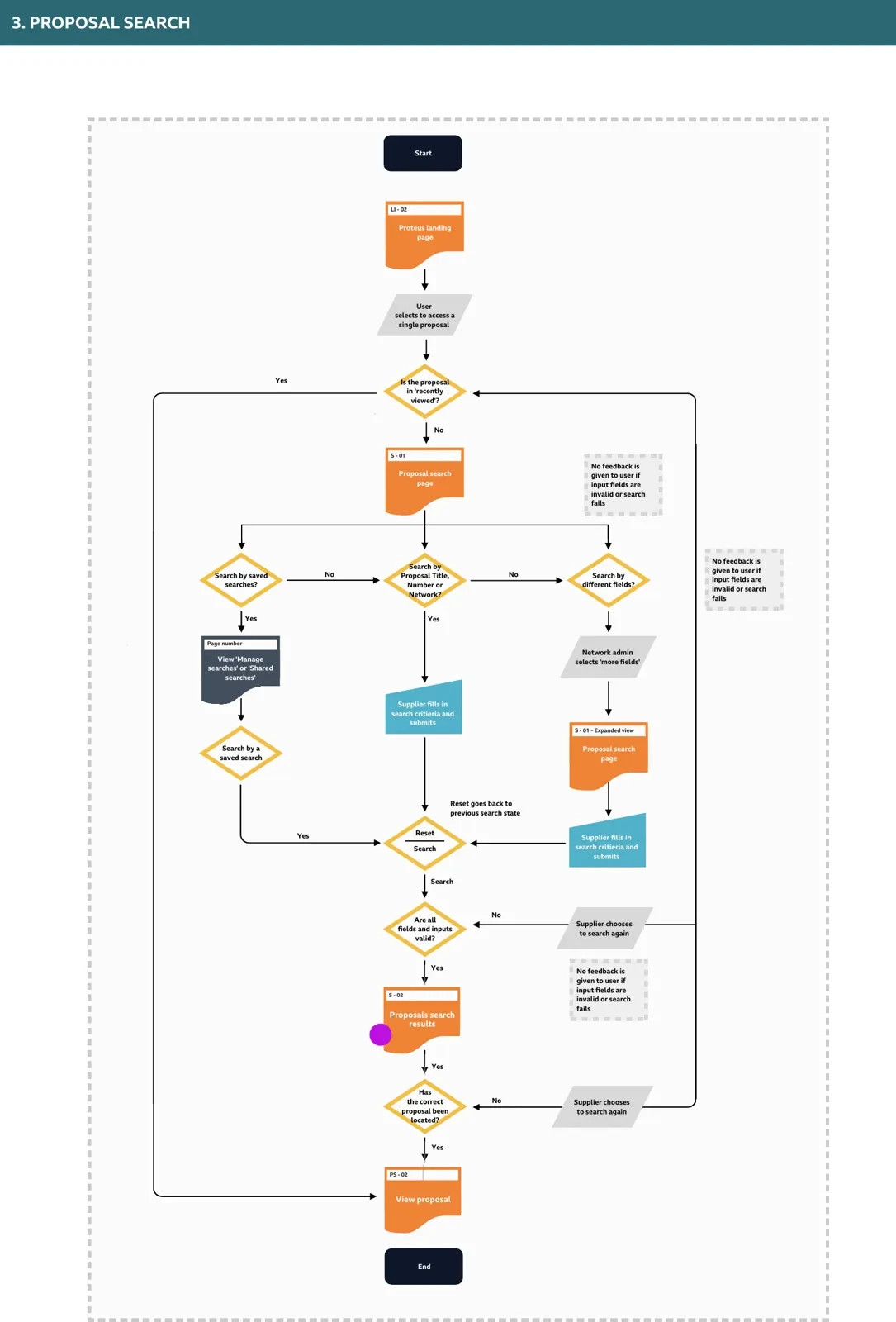
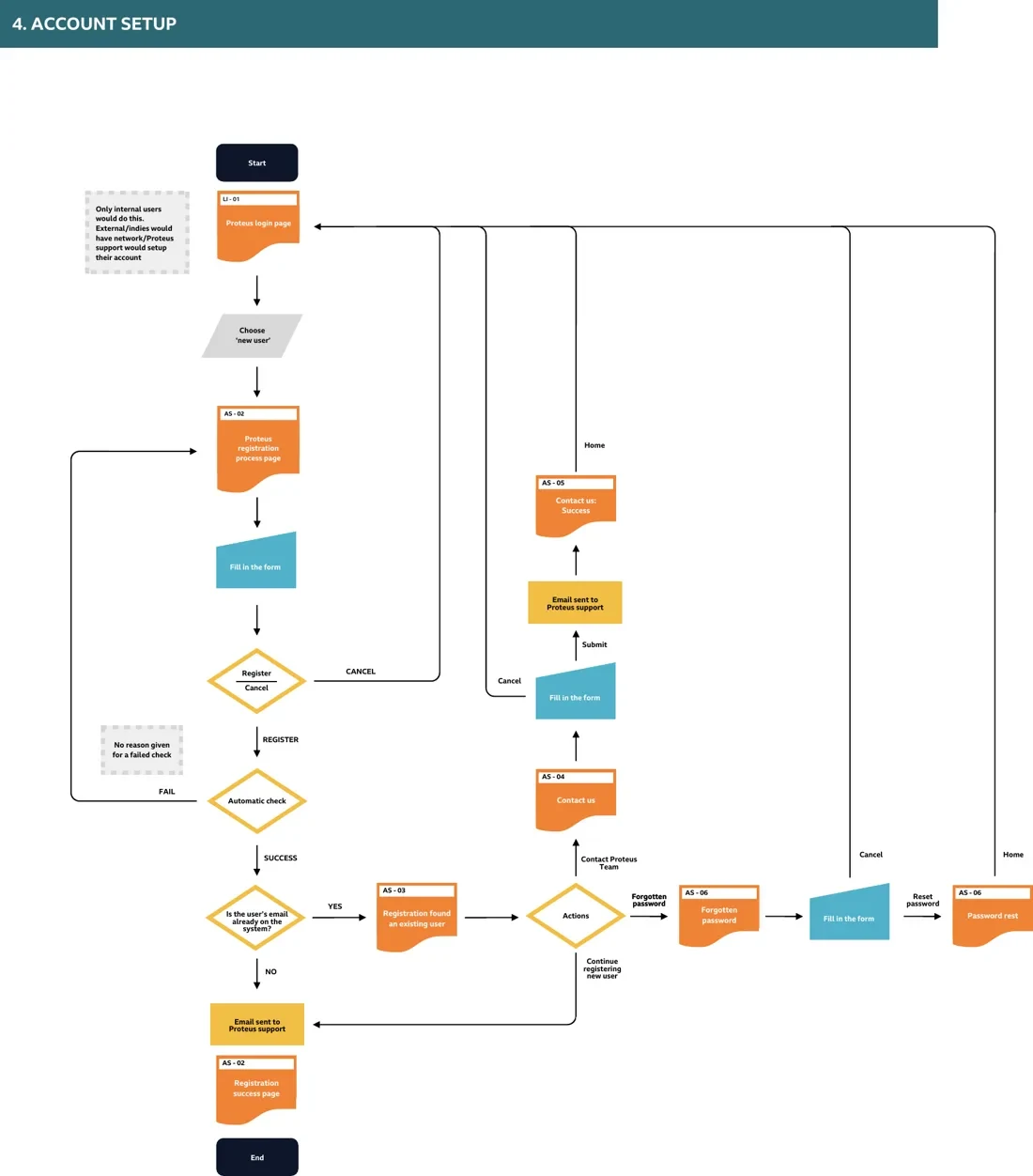
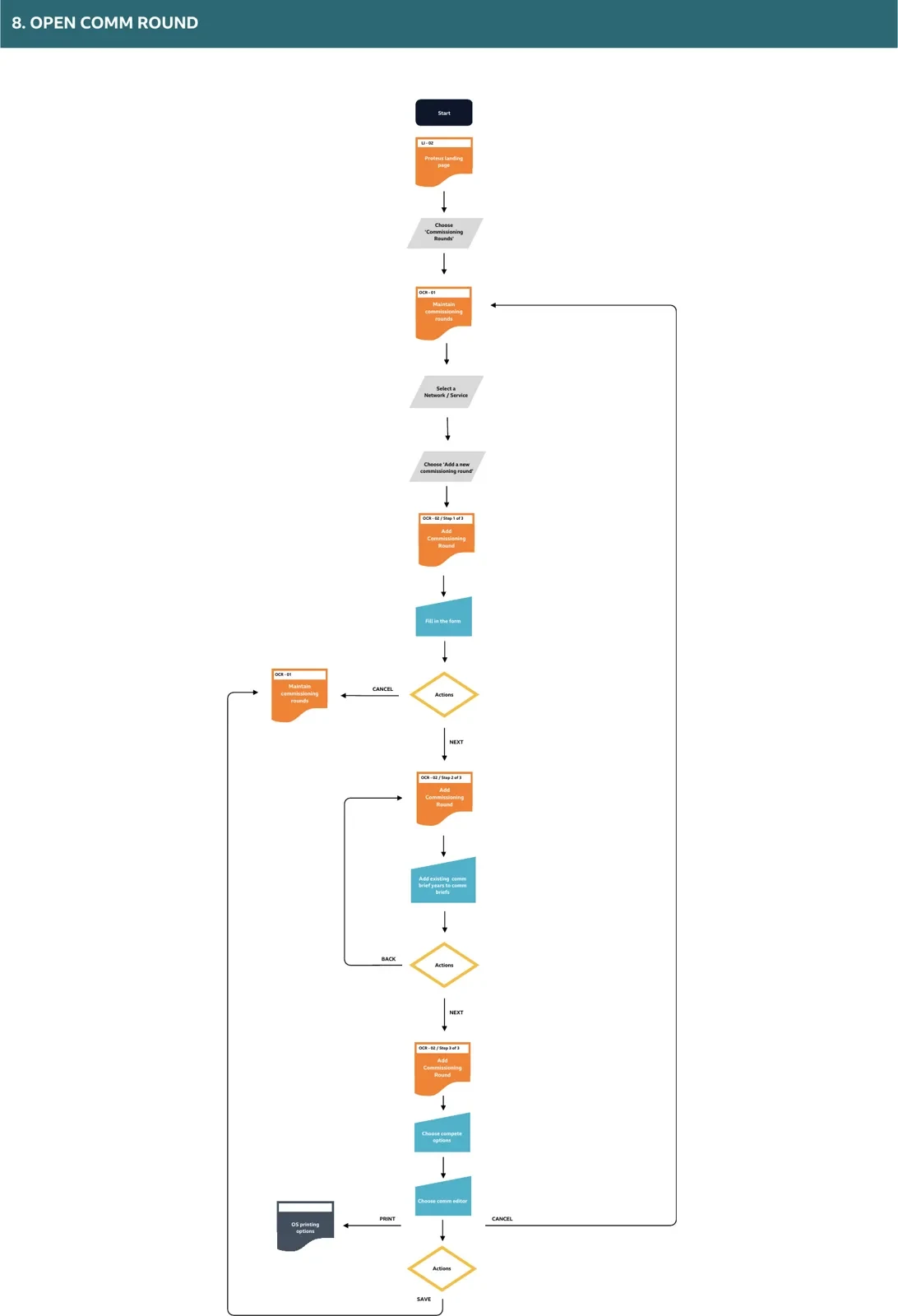
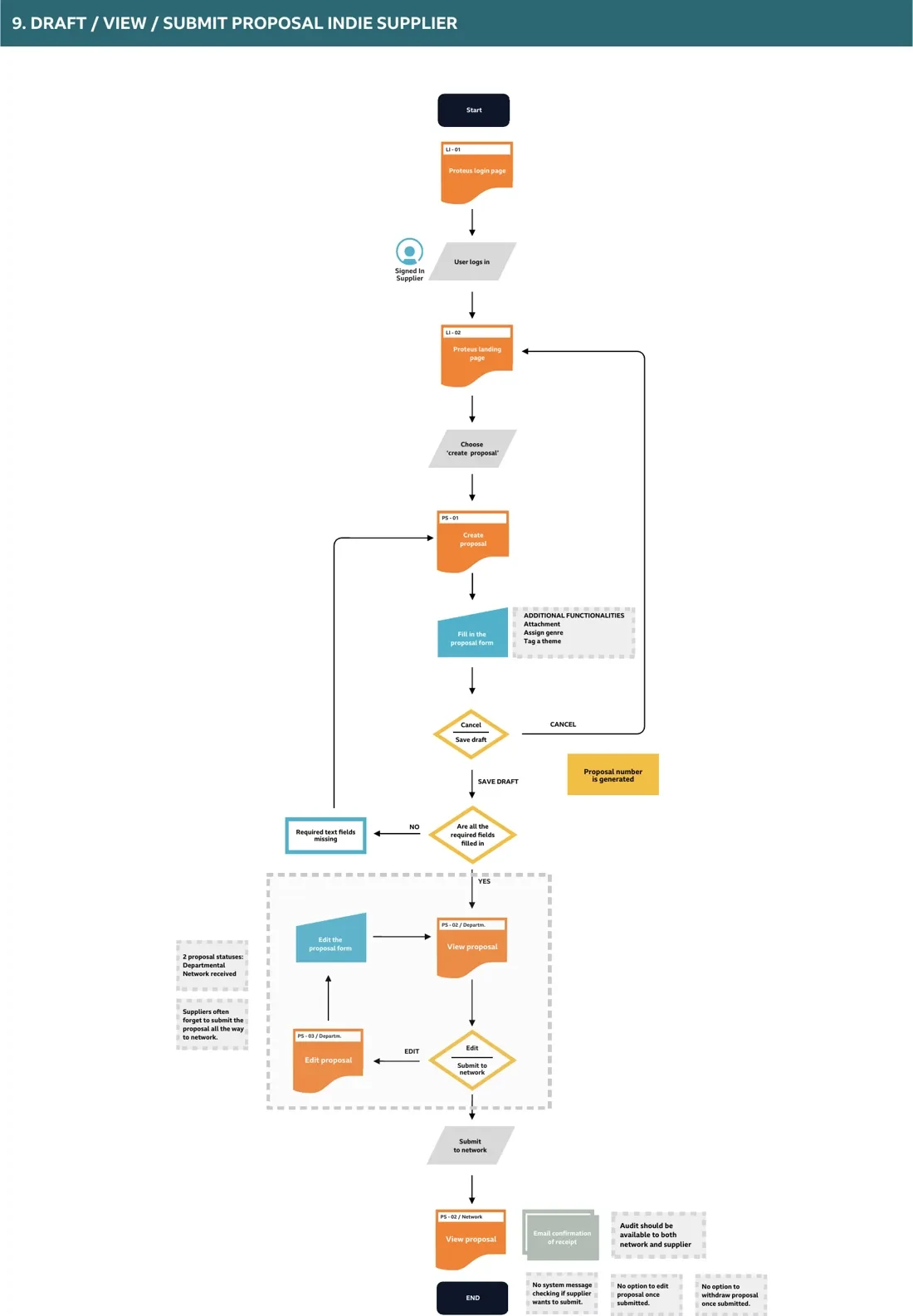
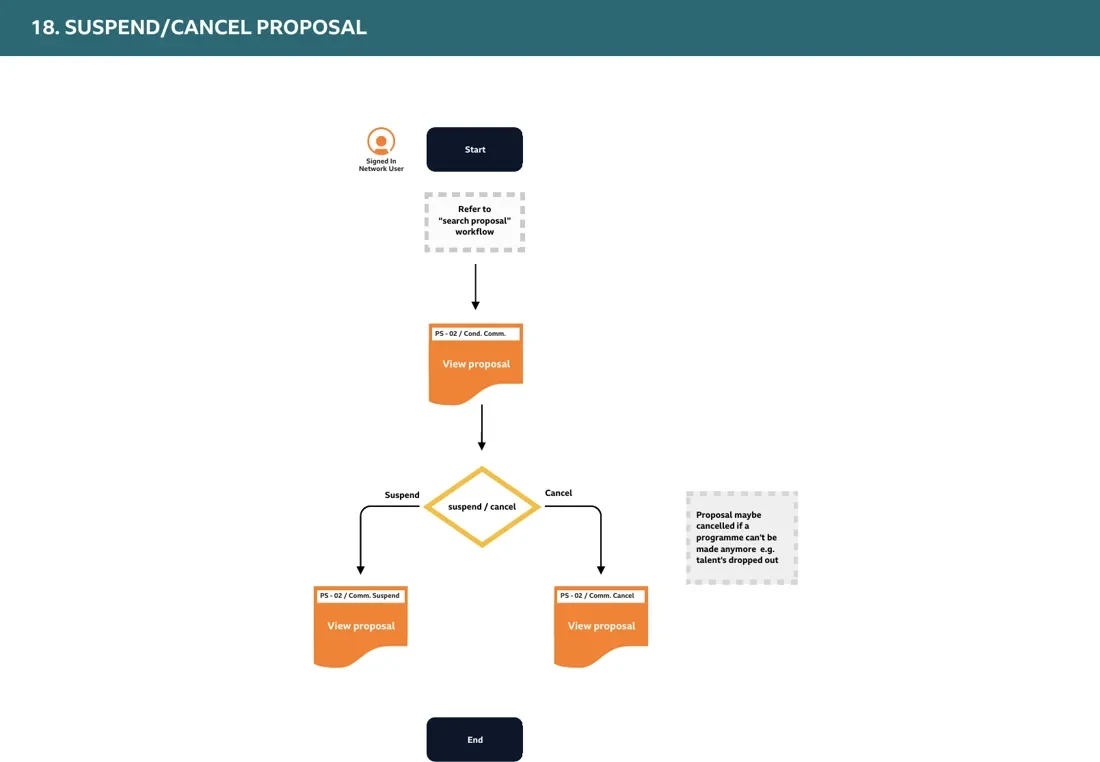
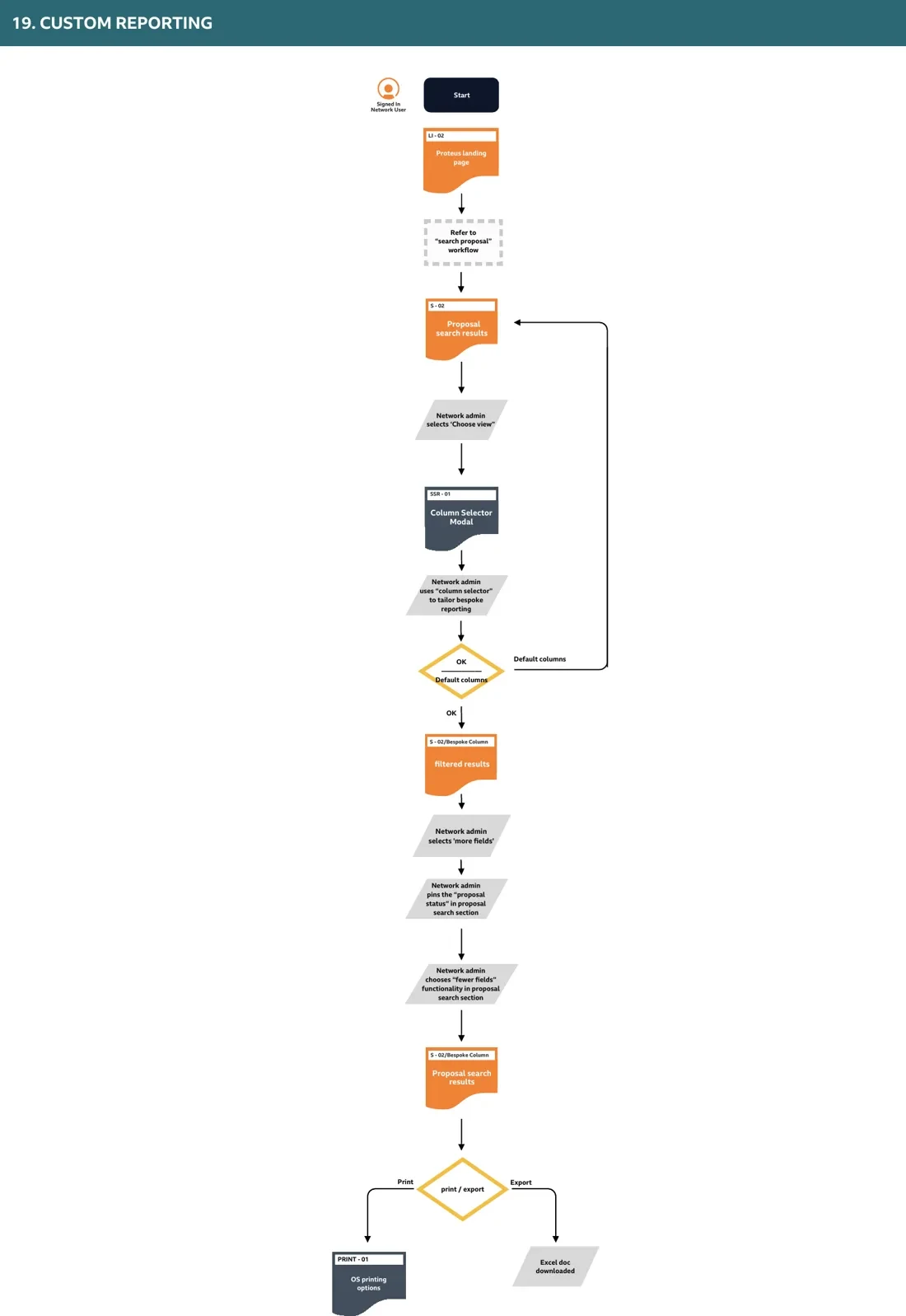
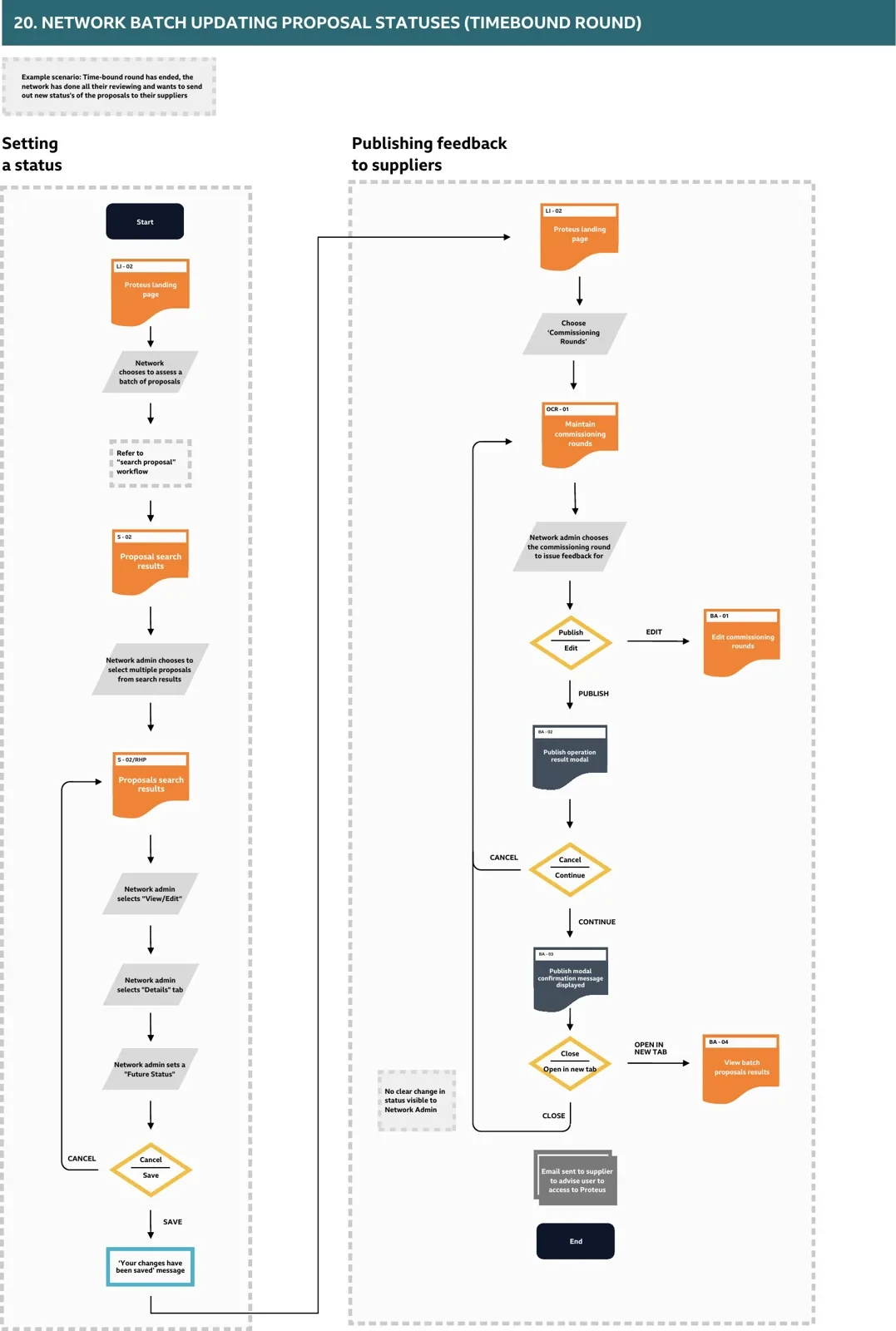
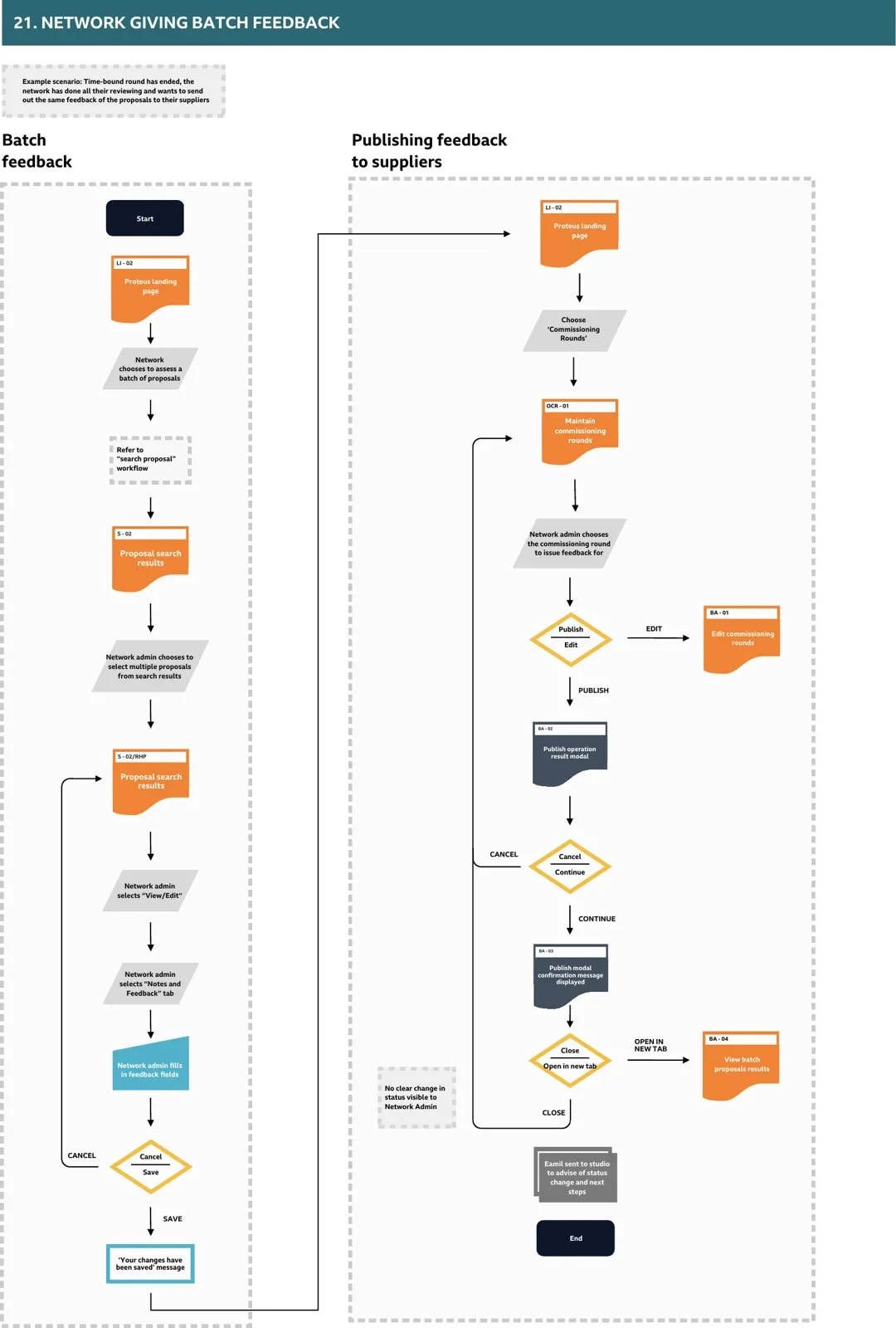
Mapping the workflows
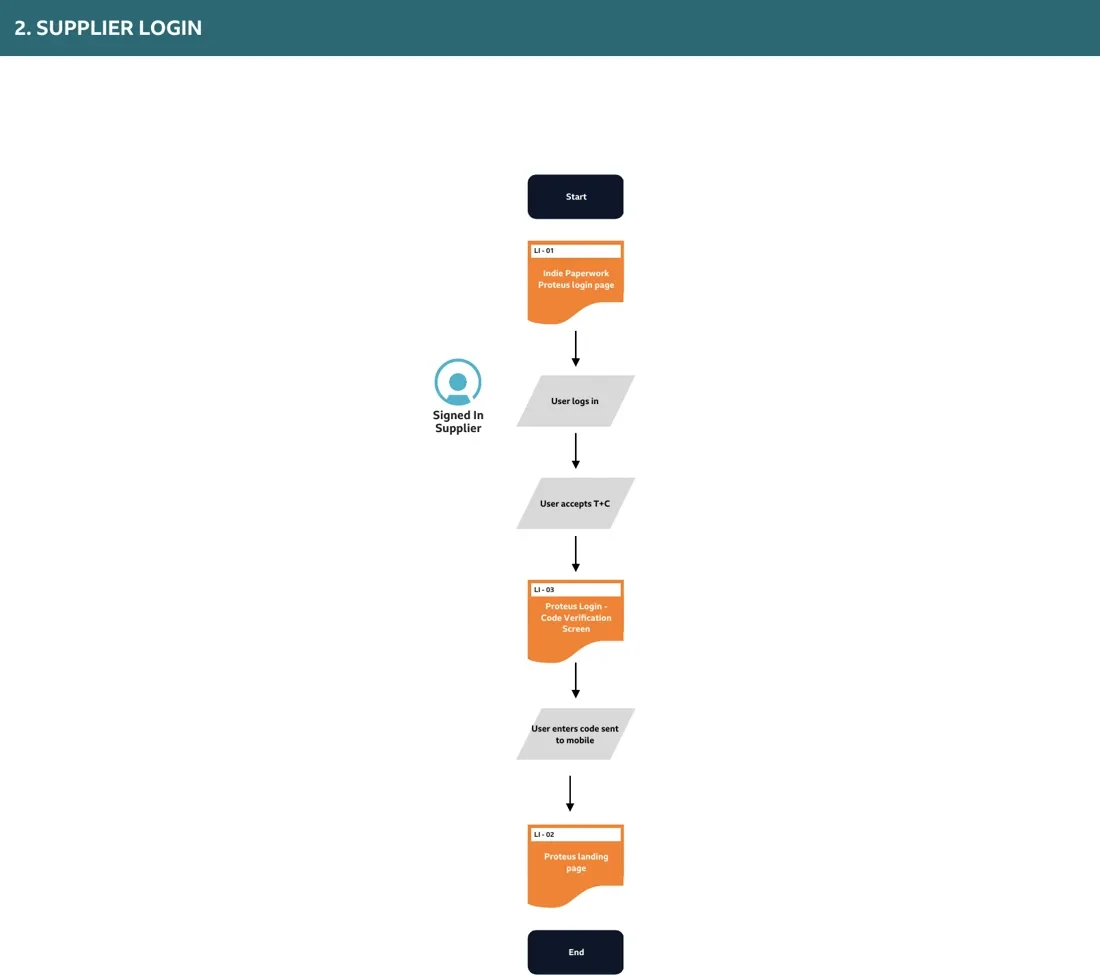
20+workflows mapped
Interviews
19interviews
Business requirements
126requirements reviewed
The initial requirements reflected the biggest networks and production companies. I pushed for 13 additional interviews, including smaller independent suppliers, bringing the total to 19.
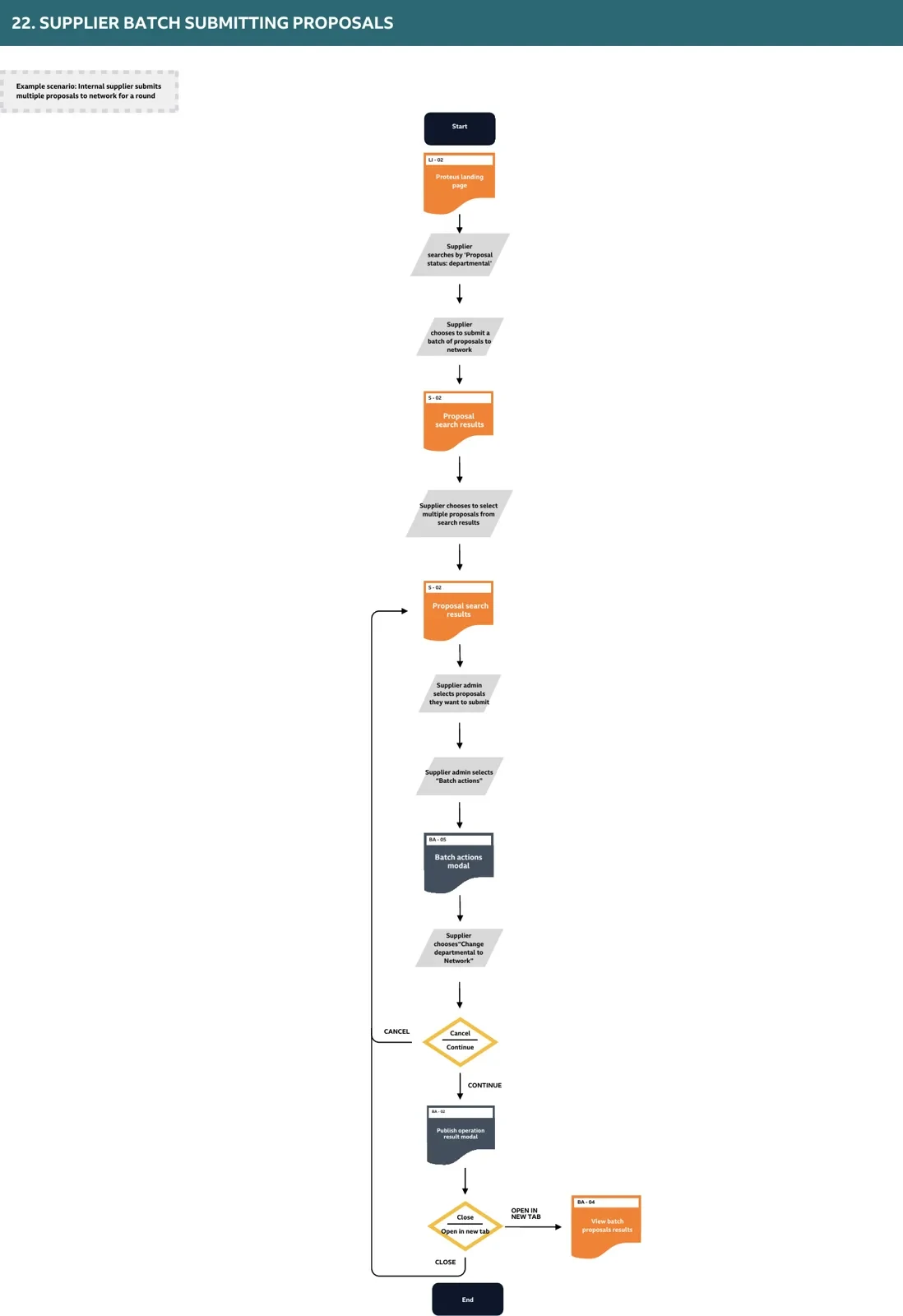
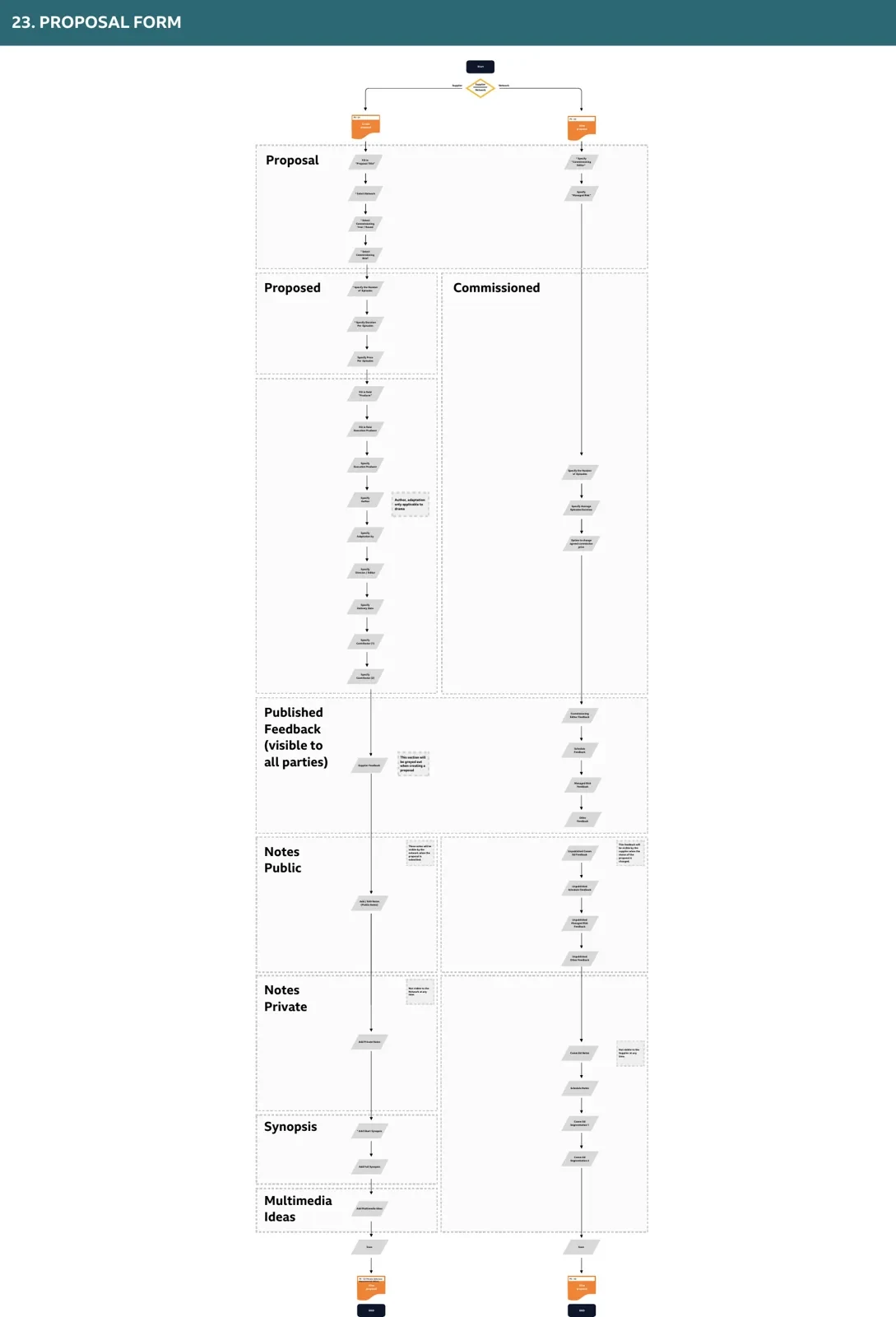
Scroll sideways through all 19 workflow maps, or use the arrows. Select the expand icon to open a map full screen.
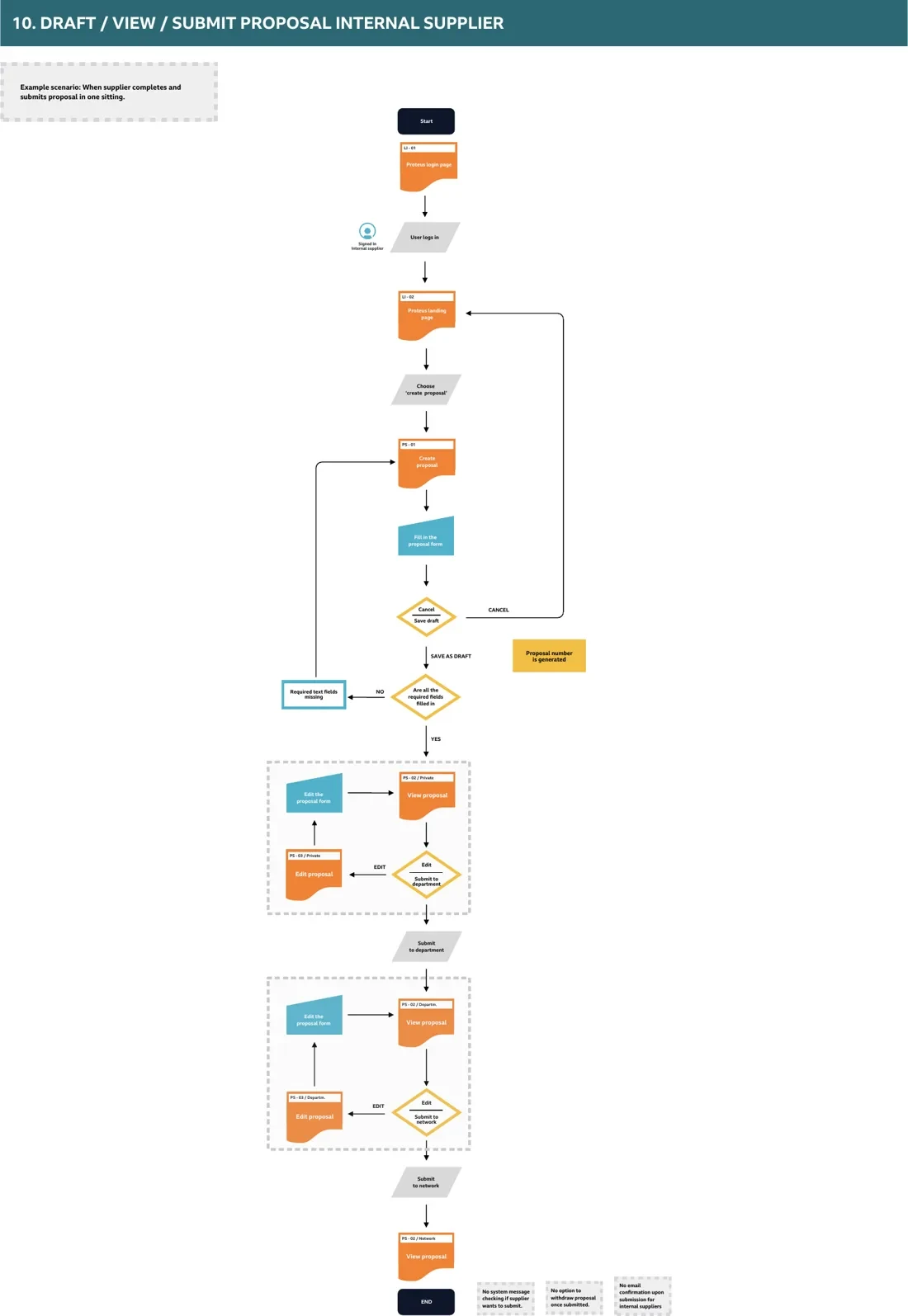
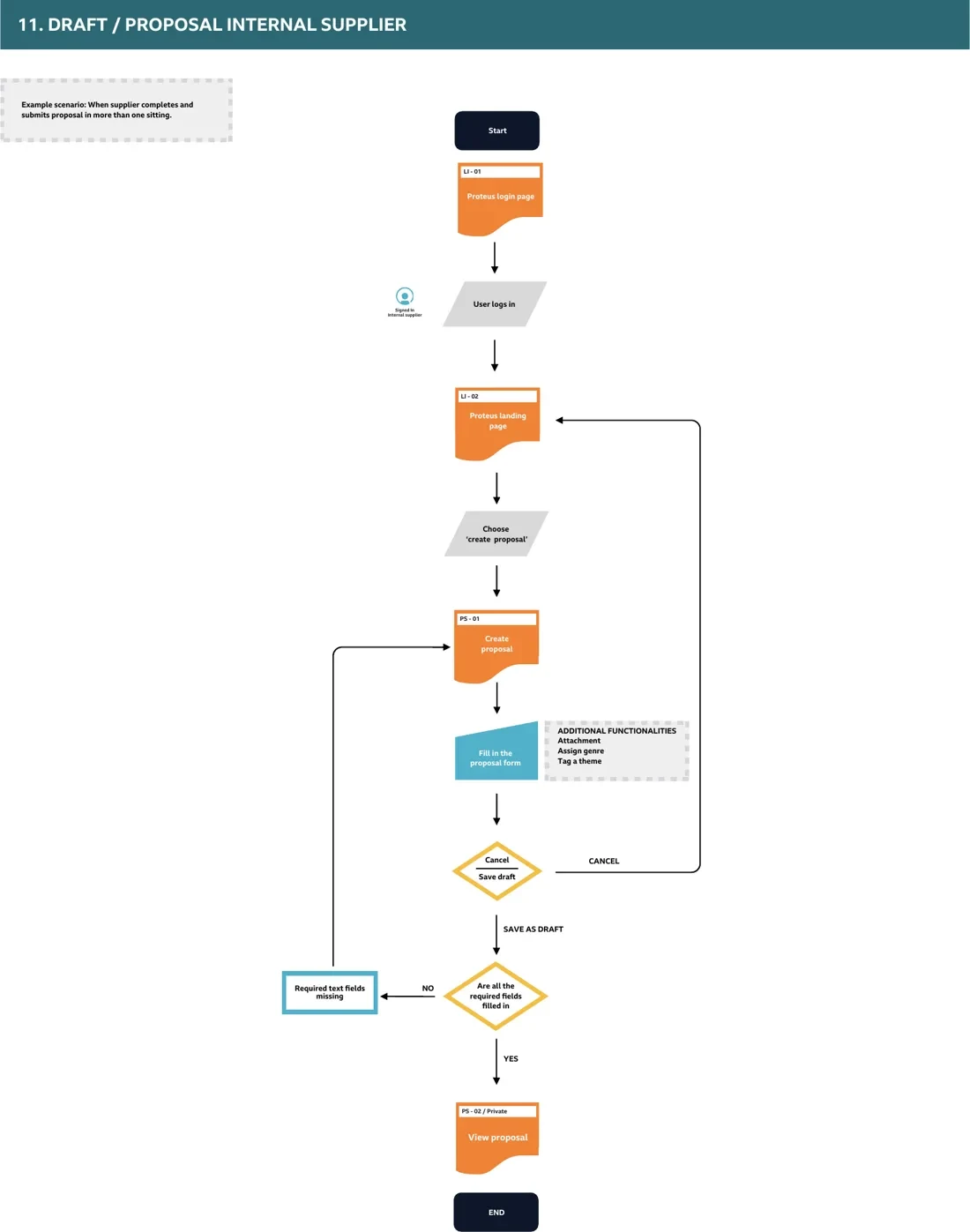
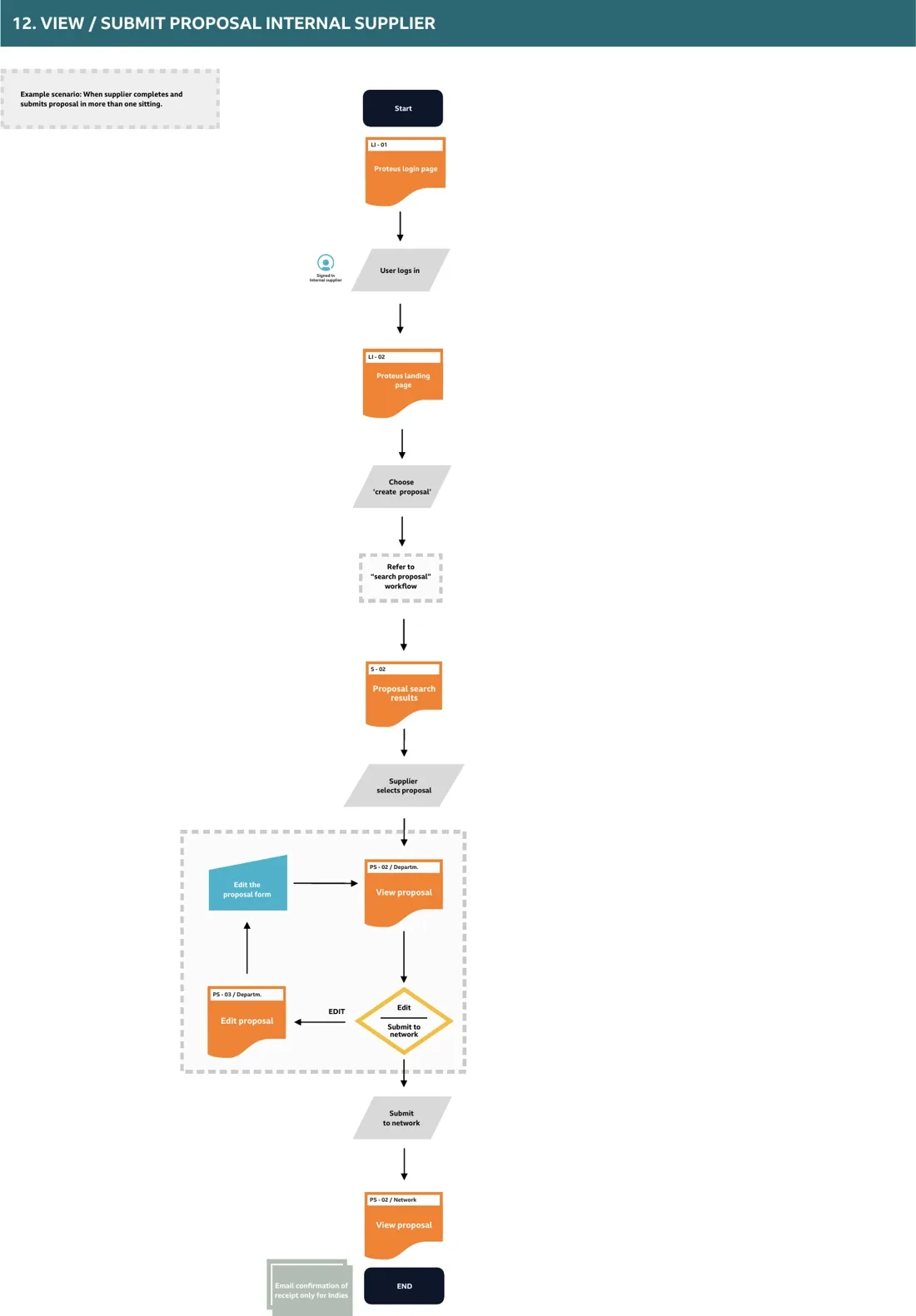
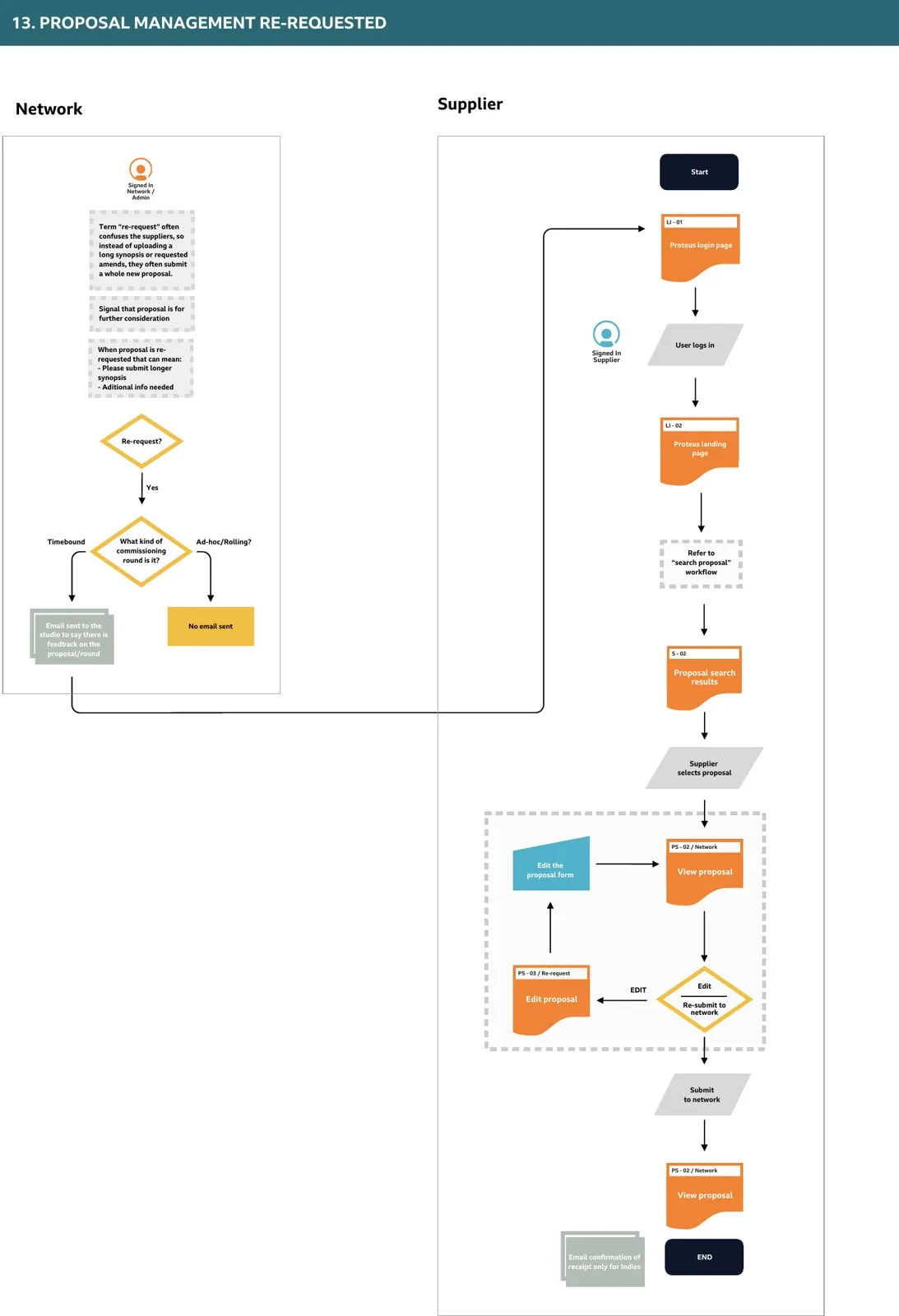
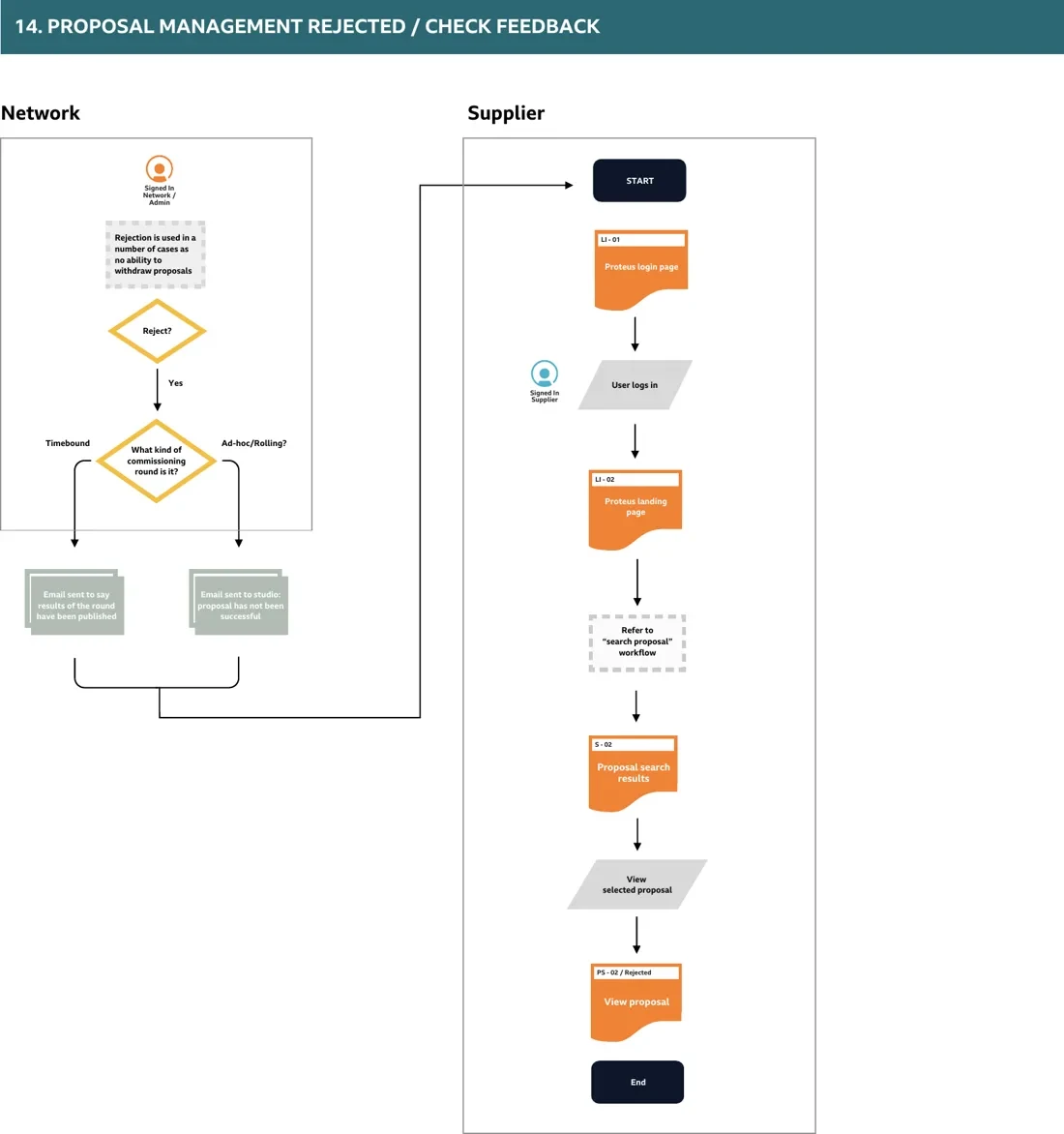
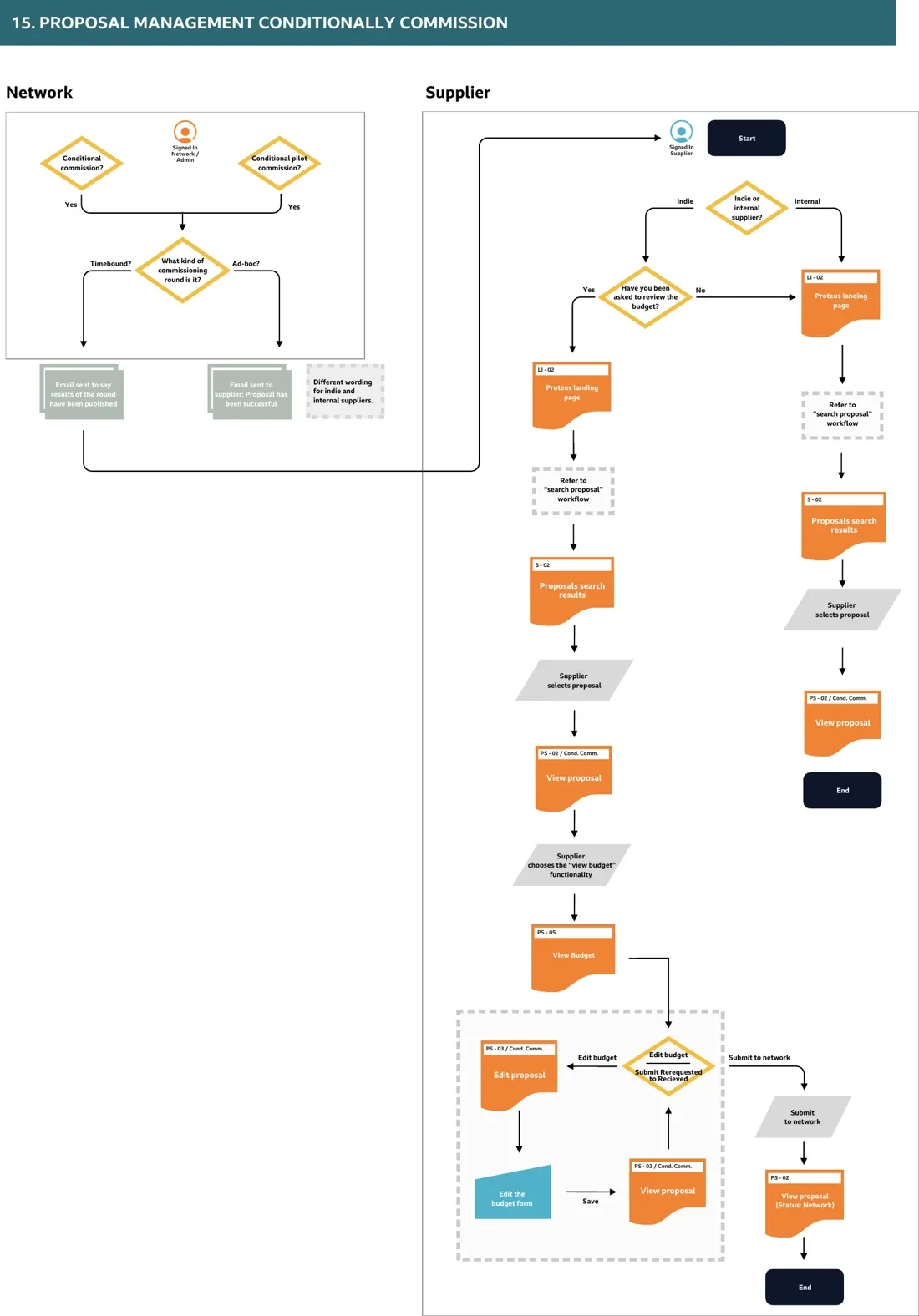
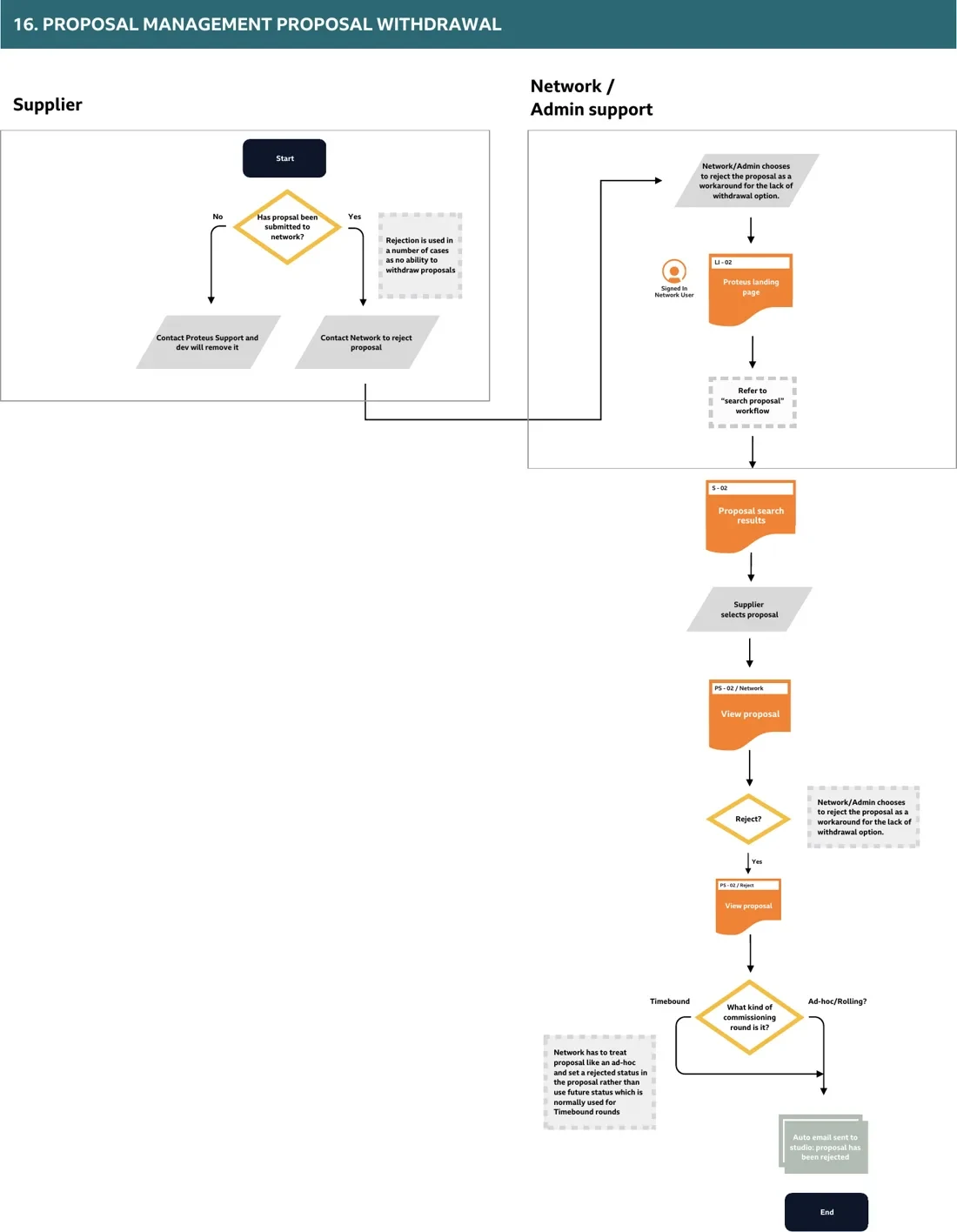
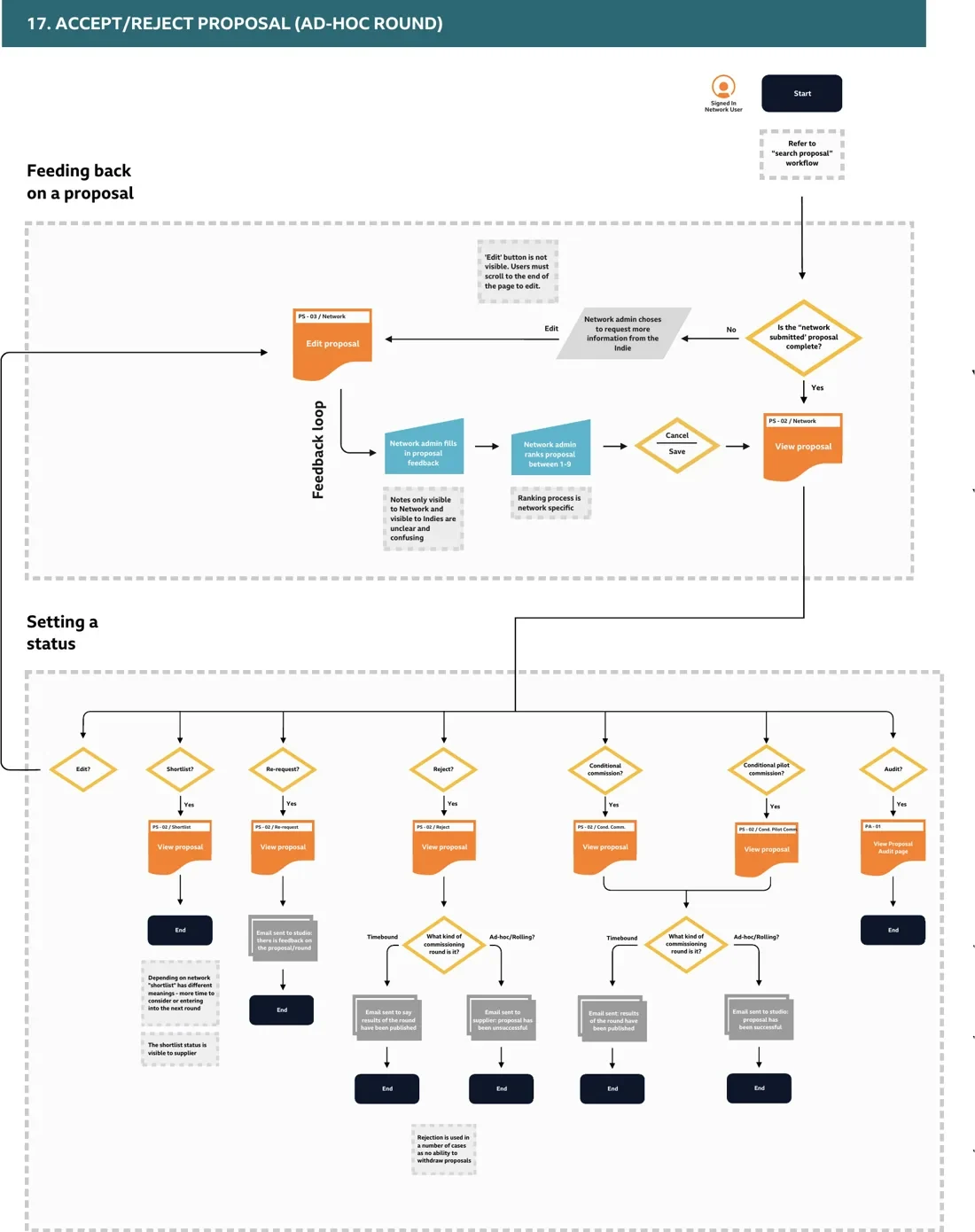
Research insights
The Radio product team’s assumptions didn’t hold
| 01Who actually used Proteus? | 02Where were proposals written? | 03What stood in suppliers’ way? |
|---|---|---|
| Product assumedCommissioners and creators used it directly. | Product assumedCreators wrote into the Proteus form. | Product assumedSubmitting presented no real hurdles. |
| Research foundAdministrators did the work. Commissioners and creators rarely used Proteus themselves. | Research foundIdeas were written elsewhere. Teams drafted and shared pitches in text editors, then handed them to an administrator. | Research foundAccess and corrections needed help. Small studios faced a London training course; proposal changes depended on BBC staff. |
“I am just the inputter on this.”
Much of the work happened outside the system. Picos had to fit around it.
Approach
Agreeing the new process together
A clearer interface depended on a clearer process. We needed to agree that process together.
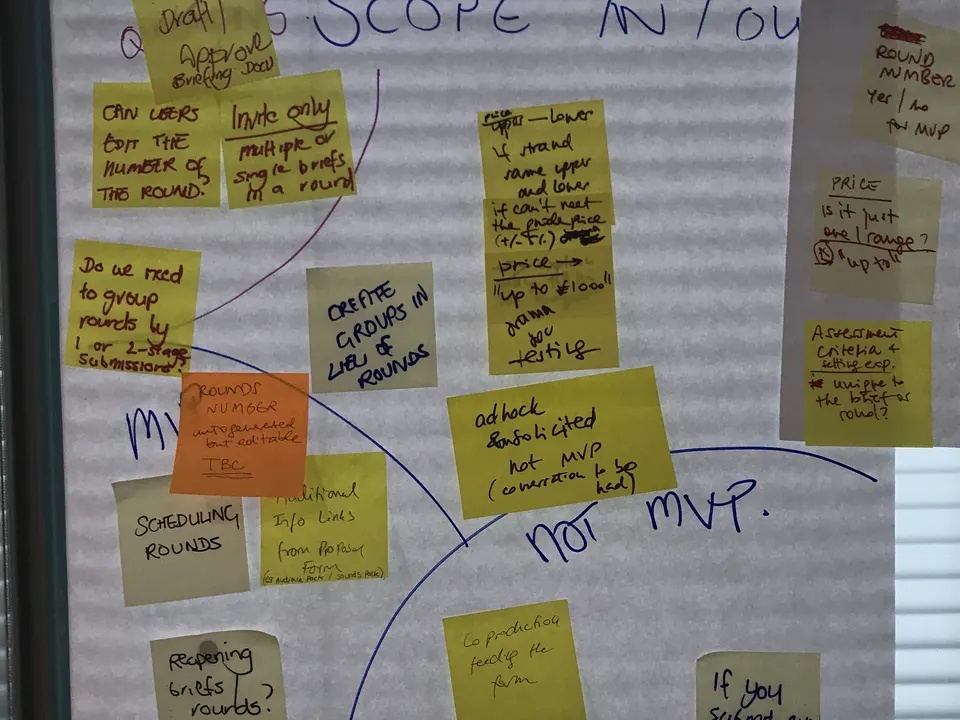
I secured support from the Product Owner and stakeholders for UX and Product to redesign the process together. I facilitated workshops to connect the journeys, resolve design choices and agree what belonged in the first release.
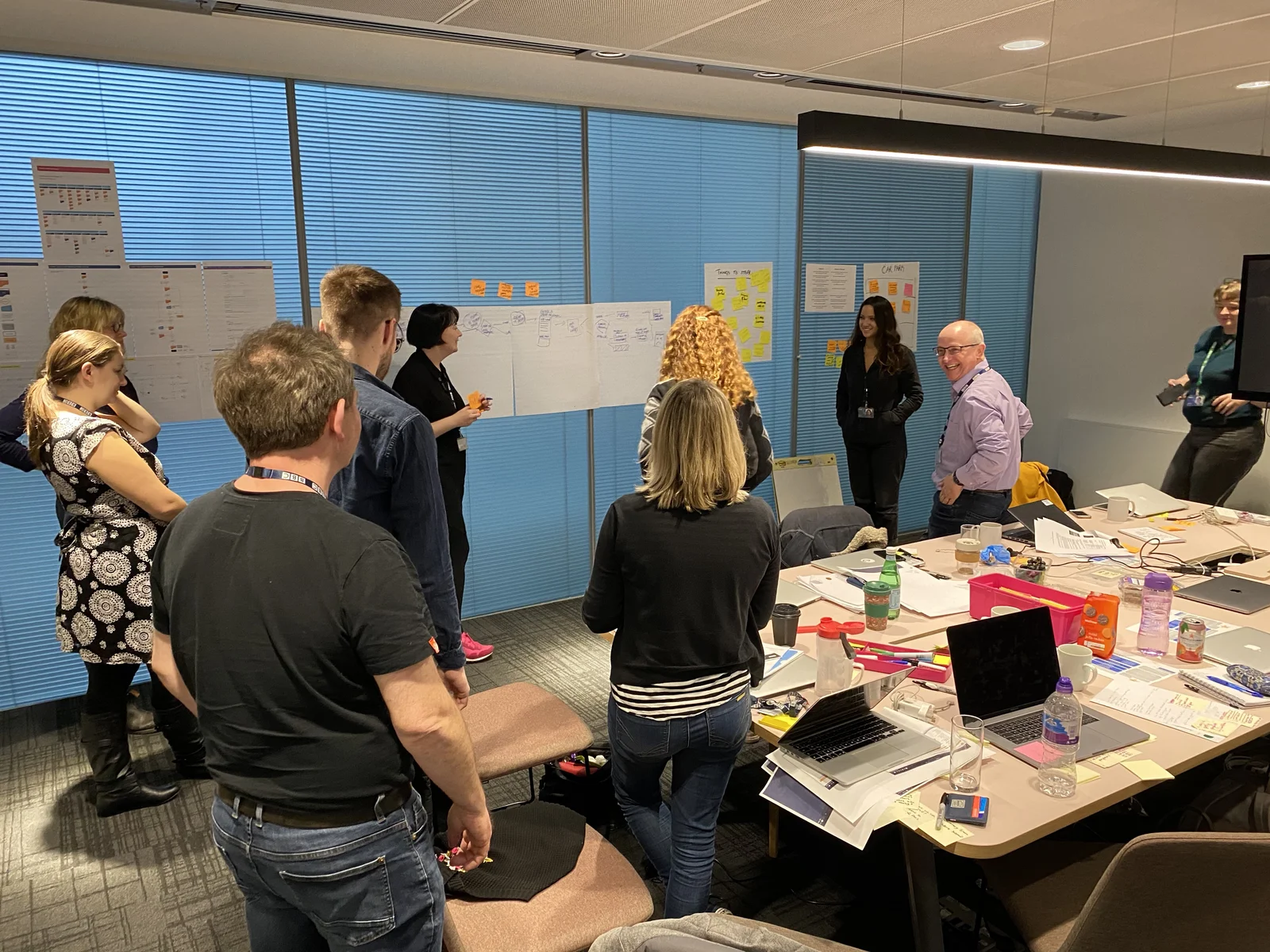
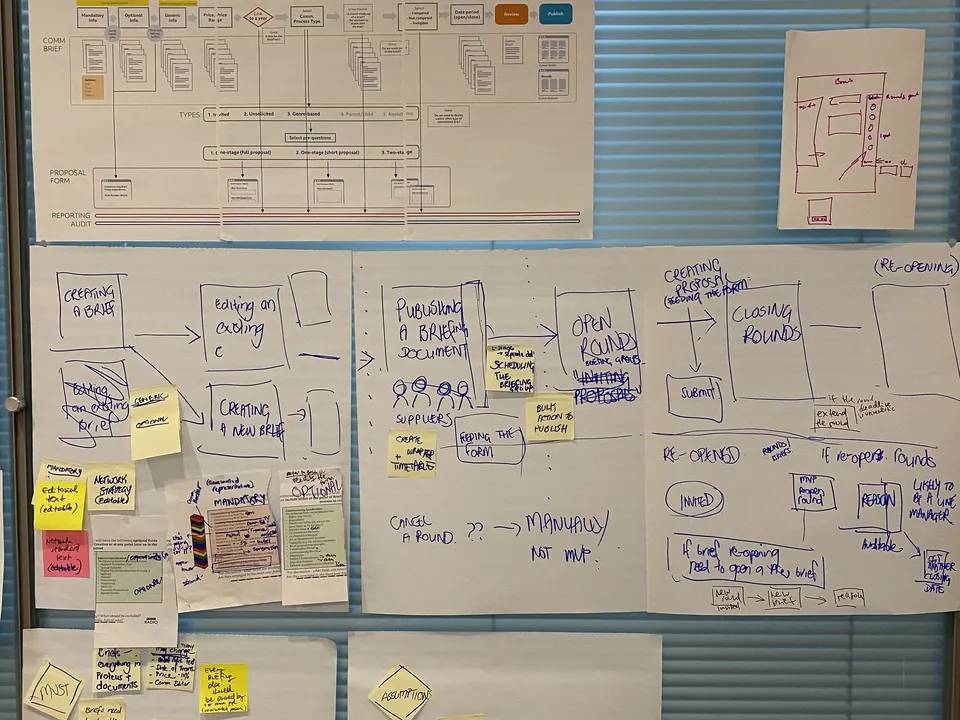
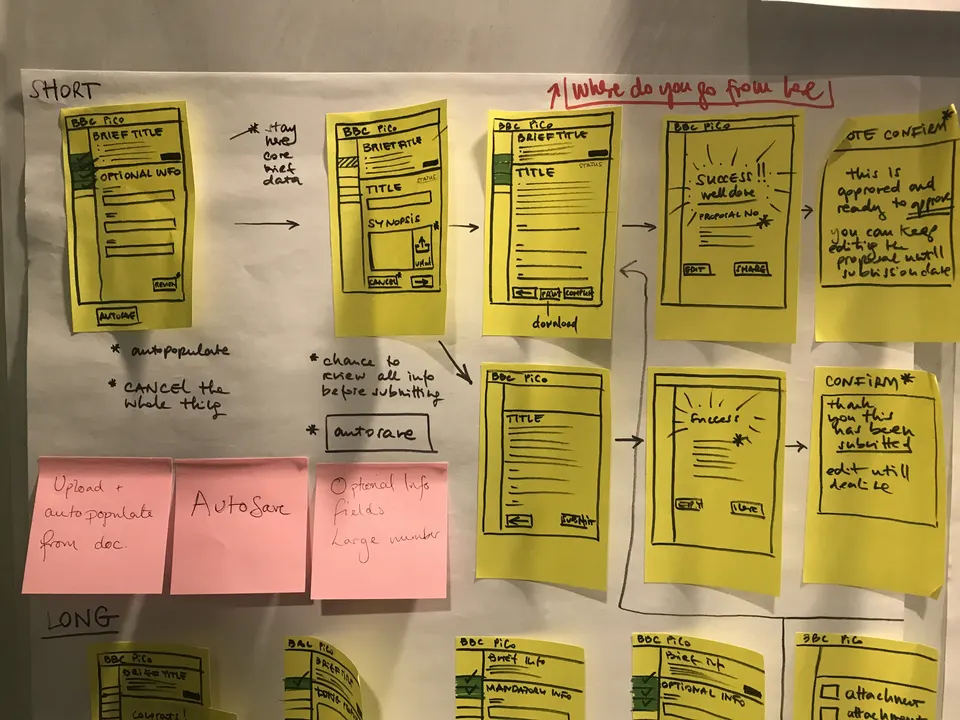
From workshop sketches to agreements
We explored existing patterns, sketched alternatives and recorded decisions for the prototype. The work gave us a direction; keeping scope agreed required continuing discussion as the project changed.
Those agreements shaped the proposals, briefs and rounds we prototyped next.
Solution
Five changes to how BBC Radio commissions
Solution 1
A proposal starts with four questions
Suppliers completed more than 20 fields, although the first review used four. We reduced the initial submission to title, idea, producer and contacts. Further detail comes later, if needed.
80% fewer initial proposal fields
Prototype testingAll nine participants completed a proposal, including new users.
“Way, way, way better than the current user process.”
The Picos proposal recording is accelerated. Recordings illustrate interactions, not measured task-time comparisons.
Before · Proteus
After · Picos
20+fields, all on one page
4questions to start
- Proposal Title*
- Network*
- Commissioning Year/Round*
- Commissioning Brief Number*
- Commissioning Editor
- Number of episodes*
- Duration per Episode*
- Price per Episode
- Notes
- Private Notes
- Delivery Date*
- Producer*
- Executive producer
- Presenter
- Author
- Adaptation by
- Director/Editor
- Contributor 1
- Contributor 2
- Short synopsis*
- Long synopsis
- Multimedia Ideas
- * Mandatory
- Title
- Idea summary, up to 250 words
- Producer
- Other contacts
- More detail only if the idea goes forward
Solution 2
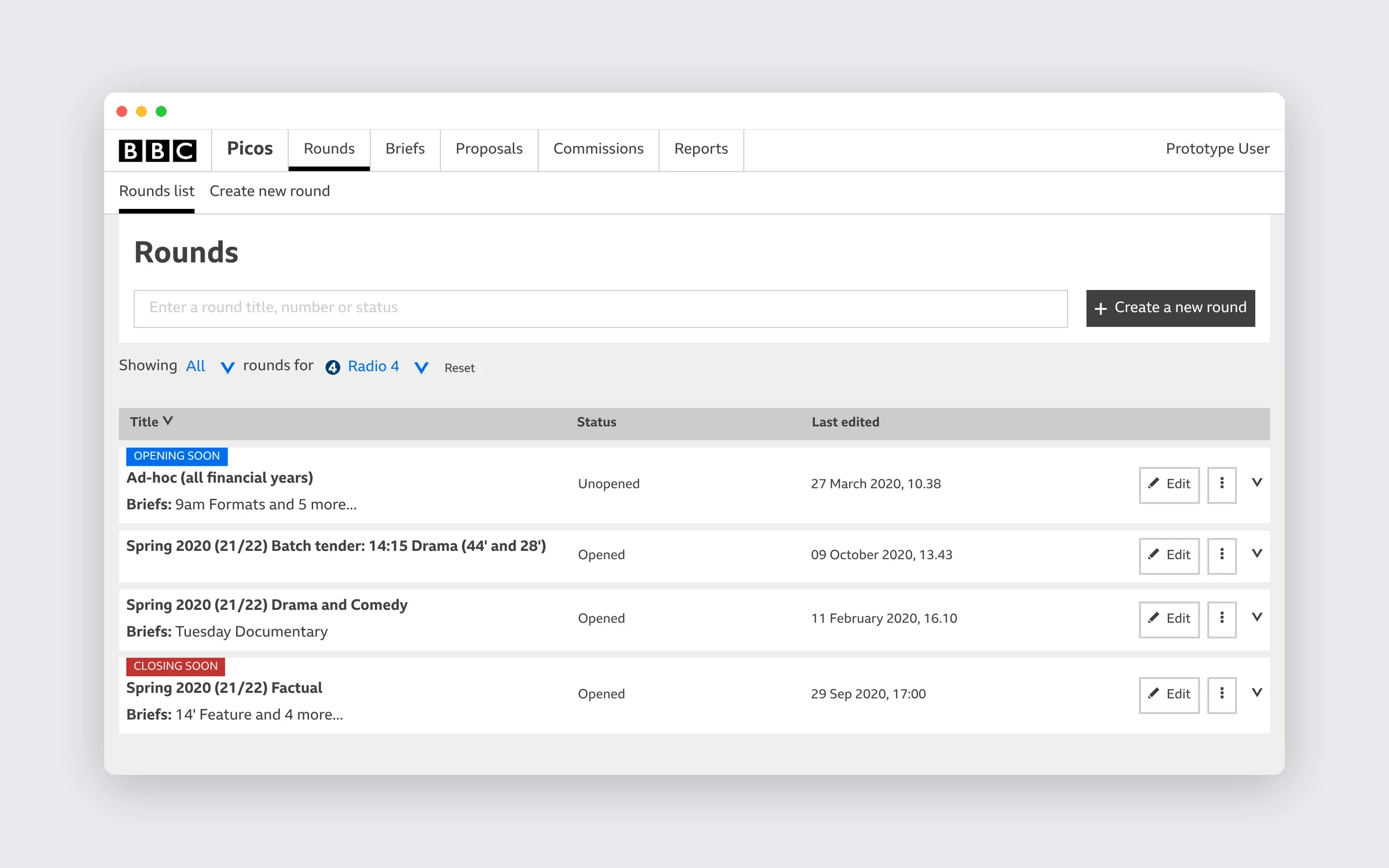
Suppliers can edit until the closing date
Change requests accounted for 67% of Proteus support cases. Every correction needed an administrator to act or reopen the round. We made proposals editable until closing, with autosave.
Email BBC staffMake the change yourself
Prototype testingAll six participants understood they could edit until the closing date.
Before · Proteus
After · Picos
- Any change needed a BBC administrator
- The administrator changed it, or reopened the round
- Suppliers forgot to resubmit, and rounds were left open by mistake
- Edit until the closing date
- Changes save automatically
- No email to BBC staff
Solution 3
Existing briefs can be copied and updated
Teams copied earlier briefs across their own tools, risking outdated details. We designed one library to find, duplicate and update briefs. Only ready briefs could attach to rounds.
Copy between documentsReuse from one library
Carried into PicosReusable briefs with Draft and Ready states.
Before · Proteus, Word and email
After · Picos
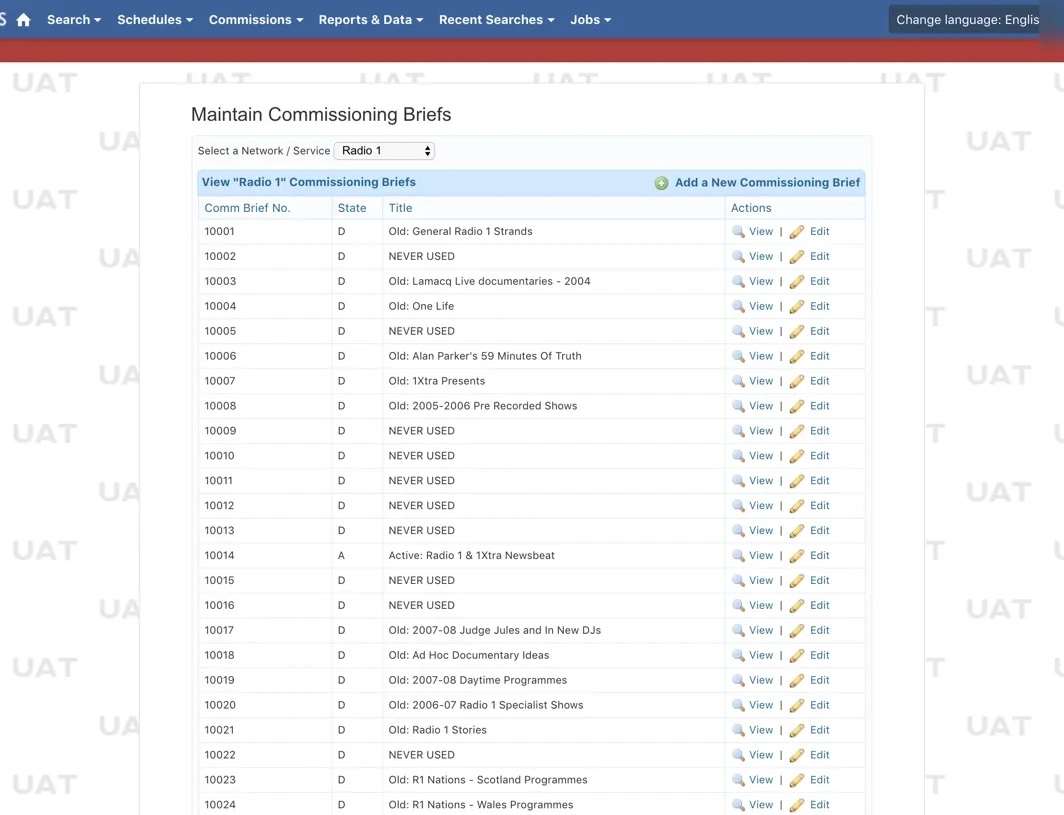
- The editorial opportunity written in Word
- The rest copied from a previous brief
- Dates, editor, panel, criteria and timetable updated by hand
- The Word file emailed on, to be published as a PDF
- Briefs kept together in one library
- Duplicate a brief, then update what changed
- Changes saved automatically
- Draft and ready states
- Only ready briefs can be attached to a round
Solution 4
Rounds are scheduled in advance
Rounds opened manually and could only close Tuesday–Thursday at midday. We designed advance setup for stages, dates and requirements, showing suppliers only relevant steps.
Open rounds by handSchedule them in advance
Carried into PicosConfigurable rounds, prepared in advance.
Briefs and rounds testingAll six participants completed four tasks. One needed a prompt on one task.
Before · Proteus
After · Picos
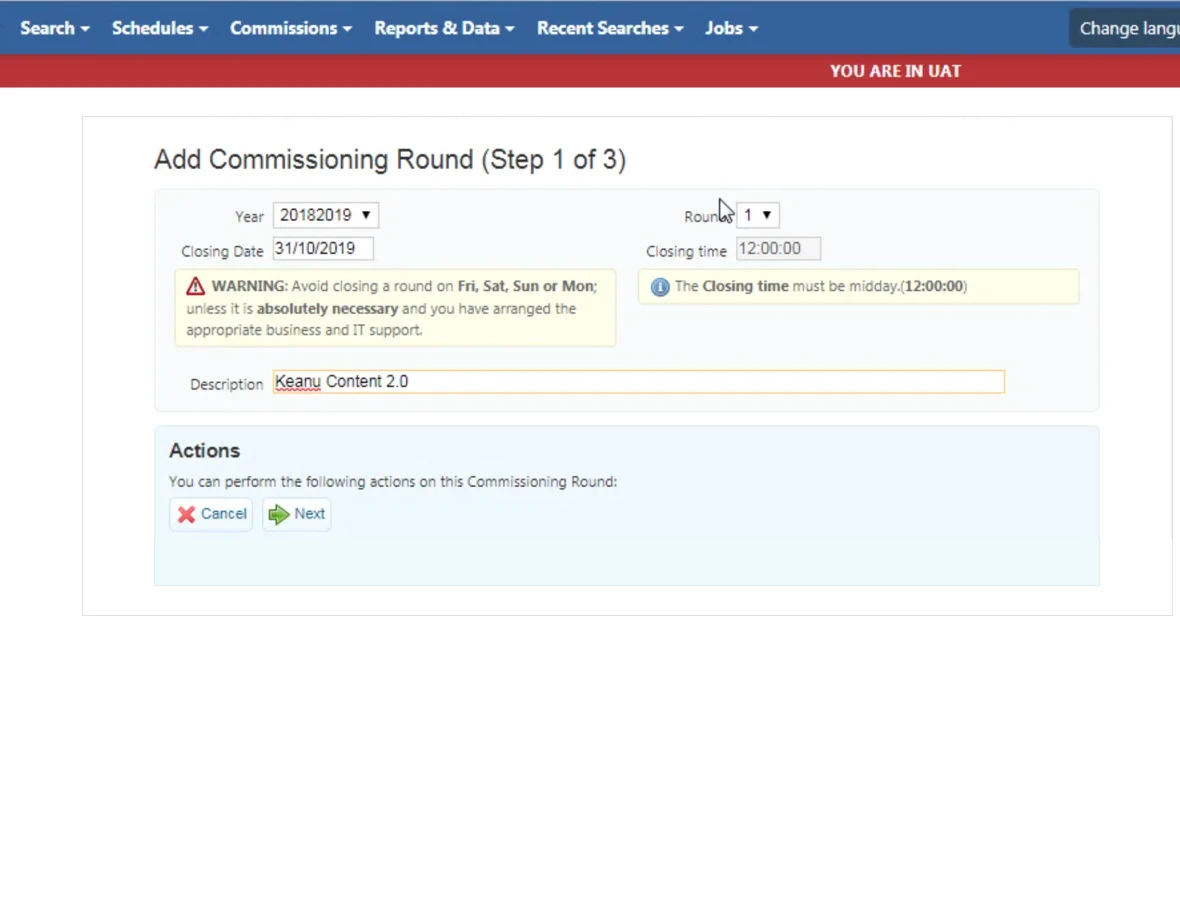
- A calendar was published, but rounds were opened on the day
- Rounds could only close Tuesday to Thursday, at midday
- Placeholder rounds marked “do not use”, still visible to suppliers
- The same proposal form for every network
- Stages and dates set when the round is created
- What’s needed from suppliers chosen for each round
- Suppliers see only the steps and fields that apply
- The closing date shown before a supplier starts
Solution 5
Two roles instead of six categories
The proposed model needed a separate permissions-management tool. Our Information Architect, Simone Ferraro, and I proposed two roles. A Change Manager championed agreement across networks.
Six proposed categoriesTwo shared roles
Carried into PicosUser and System Administrator, removing the additional tool build.
Before · The proposed model
After · The implemented model
6user categories, network by network
2roles
- Commissioning editors, by network
- Commissioning admins, by network
- Network administrators
- Suppliers, internal and external
- Supplier admins
- System admins
- User
- System Administrator
- No separate permissions tool to build
Key decisions
Testing clarified who updates were for
A Watch List let colleagues follow a proposal, but testers didn’t understand it. Our Content Designer rewrote it as email updates, and the wording was understood. We also revised contributor entry after typing a name failed to register as participants expected.
Changing scope needed clearer agreements
We reset the approach as scope kept changing: agree behaviour, make wireframes, get sign-off, then design. Simone and I made seven flow and logic maps.
We recommended writing briefs in existing tools and attaching finished documents. The reset agreement retained brief creation inside Picos.
Accessibility
Building accessibility into the work
We used IntGEL’s tested components, fed gaps back, and improved status messages, contrast and plain-English guidance. Every usability-testing round included someone with access needs, following BBC practice.
Results
Changes to the service and the way the team worked
Picos launched after I handed over, carrying forward our proposal, brief, round and permissions designs.
fewer initial proposal fields
of Proteus support cases were change requests
roles. No separate management tool.
two-day London course
User-centred design embedded in the department. Research and co-design became part of decision-making, giving UX a place at the stakeholder table.
What prototype testing showed
participants completed a proposal, including new users.
understood they could edit their proposal until the closing date.
completed the briefs and rounds tasks. One needed a prompt on one task.
“Way, way, way better than the current user process”
Reflection
Agree shared goals and measures earlier
Product’s priority became Radio 4; UX was designing for all of Audio, including podcasts. Those different goals surfaced in decisions such as where brief writing belonged.
Scope drift cost time and people. Dates slipped, and I rebuilt the team as colleagues left. I now use requirements documents on ambiguous projects to agree goals, scope and decision ownership. A shared measure, such as the simplest way to create a brief, would have helped resolve disagreements.
Thanks to
Tom Johnson Creative Director, Systems and Service Design, Bekki Leaver Information Architect & Researcher, Simone Ferraro Information Architect, Lydia Laitung UX Designer, Jonathan McKee UX Designer and Maya Grakalic UX Designer.